On this page
Cats are fastidious animals with a strong instinct to dig, eliminate and cover in loose material. That is why most kittens use a litter box almost from the first day without being taught. When a cat stops using the box, it is almost never spite. It is communication: something about the box, the cat's health or the household isn't working for them.
This guide covers how to set up litter boxes cats actually like, how to keep them clean, how to read what you find in them, and how to work through problems step by step. It also covers one litter box situation that is a genuine emergency, so please read that section even if your cat has never had an accident.
The n+1 rule: how many boxes you need
The standard guideline is one litter box per cat, plus one. One cat needs two boxes, two cats need three, three cats need four, and so on. It sounds like a lot, but it makes a real difference:
- Many cats prefer to urinate in one box and defecate in another.
- A spare box means there is always a clean option, even if you miss a scoop.
- In multi-cat homes, extra boxes reduce competition and stop one cat from guarding the only toilet.
- If one box becomes unappealing for any reason, your cat has an alternative that isn't your bath mat.
There is one important detail: boxes lined up side by side count as one box from a cat's point of view, because a cat who wants to avoid that area, or another cat, can't use any of them. Spread boxes out in different locations. In a home with more than one floor, put at least one box on each floor where your cat spends time.
Box size and type
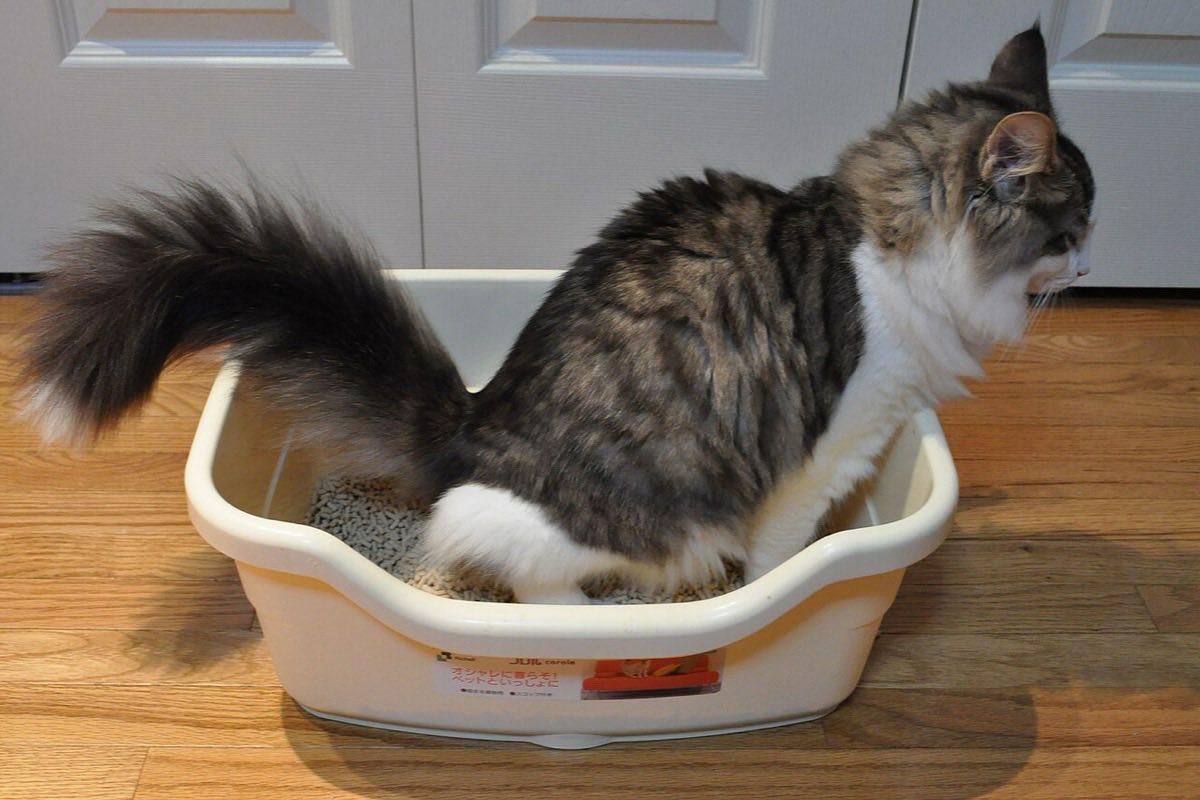
Most litter boxes sold in stores are smaller than cats would like. Feline welfare guidelines suggest a box should be at least one and a half times the length of your cat, measured from nose to the base of the tail. A cat should be able to step in, turn around comfortably and dig without hanging over the edge.
For many adult cats, especially large breeds like the Maine Coon, that means a box bigger than anything in the pet aisle. A large plastic storage tote is an inexpensive alternative. Cut a low, smooth entry in one side and leave the lid off.
Covered or uncovered?
Many people prefer covered boxes because they hide the view and contain litter scatter. Many cats prefer uncovered ones. A cover traps odors inside, where a cat's sensitive nose meets them at full strength. It also leaves a cat with only one way out, which can feel risky in a home with other pets. If your cat uses a covered box happily, there is no need to change it, but keep it especially clean. If you are setting up a box for a new cat, start with an uncovered one.
Entry height
Kittens, senior cats and cats with arthritis need a low entry they can step over without jumping. A box with high sides and a cut-out entry works for cats who kick litter.
Self-cleaning boxes and liners
Automatic self-cleaning boxes suit some cats and households. Others are startled by the motor and start avoiding the box. They can also make it harder to notice changes in your cat's urine and stool, which are useful early warning signs of illness. If you try one, keep an ordinary box available, and introduce the automatic features gradually. Plastic liners are disliked by some cats, whose claws catch on them, so remove liners if you see any reluctance.
Choosing litter
Cats have strong preferences about what they dig in, and once they have a favorite, it is usually best not to change it. In general:
- Unscented, clumping litter with a fine, sandy texture is a common favorite and is a good default for most cats.
- Scented litters, deodorizing powders and air fresheners near the box can put cats off. Their sense of smell is far more sensitive than ours. A clean box is the best odor control.
- Alternatives such as wheat, corn, pine, walnut, paper and silica crystal litters work well for some cats and owners. Paper pellets are often used after surgery, on your veterinarian's advice.
- Kittens sometimes taste or eat litter. If a young kitten keeps eating it, ask your veterinarian whether a different type would be a better choice for now.
Fill the box deep enough for your cat to dig and cover, typically a couple of inches. Watch what your cat does: some like a deeper bed to dig in, and some long-haired cats prefer it shallower. If you need to change litter, do it gradually by mixing a little of the new litter into the old over a week or two, or offer the new litter in a separate box and let your cat choose.
Where to put litter boxes
Location is often what decides whether a box gets used. Choose spots that are:
- Quiet and low-traffic, but not so remote that your cat has to travel far. A box at the far end of a cold basement may be ignored, especially by older cats.
- Away from noisy appliances. A washing machine or furnace that starts up mid-visit can create a lasting aversion.
- Away from food and water. Cats don't like to eat near where they eliminate, and many won't.
- Open, with escape routes. Avoid tucking boxes into the back of a closet or a tight corner where a cat can be cornered by another pet or a child.
- Accessible at all times. Doors that might close, baby gates and pet doors can all cut a cat off. A night light helps senior cats find the box after dark.
- Out of reach of dogs and toddlers, who can find litter boxes irresistible.
Once a box is in place, try not to move it. If you must, set up a box in the new spot first and wait until your cat is using it before removing the old one.
Cleaning and maintenance
A dirty litter box is one of the most common reasons cats start going elsewhere. Think about how you would feel about a public restroom that hadn't been cleaned all day.
- Scoop at least once a day, and twice if you can. Remove clumps and stool, and top up litter to keep the depth consistent.
- Empty and wash the whole box regularly. With clumping litter, every couple of weeks is a reasonable routine for many households; non-clumping litter needs changing more often, often weekly. Wash with warm water and a mild, unscented soap, rinse well and dry before refilling.
- Avoid strong-smelling cleaners such as bleach, ammonia, pine oil or citrus products in and around the box. Ammonia in particular smells like urine to a cat.
- Replace plastic boxes when they become scratched, because scratches hold odors and bacteria. Once a year is a common rule of thumb.
- Wash your hands after scooping. If anyone in the household is pregnant or has a weakened immune system, someone else should scoop if possible, because cat feces can carry the parasite that causes toxoplasmosis.
Don't flush clumps or stool down the toilet unless the litter is specifically labeled as flushable and your plumbing and local rules allow it. Even then, many water authorities advise against it.
What the litter box tells you
Scooping every day gives you a free daily health check. Get to know what is normal for your cat: roughly how many urine clumps you find, how big they are, and what stools usually look like. Then watch for changes, such as:
- More or bigger urine clumps, which can be a sign of increased thirst from kidney disease, diabetes or an overactive thyroid.
- Many small clumps, frequent trips to the box, or urine with blood in it, which point to bladder irritation or another urinary problem.
- Diarrhea, very hard or small stools, or straining to pass stool, which can indicate digestive problems or constipation.
- Stools outside the box, which can be a sign of pain, arthritis or constipation.
Any of these deserve a call to your veterinarian. Most are not emergencies, but some are, and one in particular needs immediate attention.
Troubleshooting: when a cat stops using the box
Inappropriate elimination is stressful for owners, but it is very often fixable. Work through the possible causes in order, starting with health.
Step 1: Rule out a medical problem
Always start with a visit to your veterinarian. Many cats who eliminate outside the box are unwell or in pain, and no amount of box changes will help until that is treated. Common medical causes include:
- Feline lower urinary tract disease (FLUTD), an umbrella term for bladder and urethra problems. In younger cats, the most common cause is feline idiopathic cystitis, a painful bladder inflammation closely linked to stress.
- Bladder crystals or stones, which may be managed with a special diet or need other treatment.
- Urinary tract infections, which are more common in older cats and in cats with other conditions.
- Conditions that increase urine volume, such as kidney disease, diabetes and hyperthyroidism.
- Arthritis or other pain that makes climbing into the box or squatting uncomfortable. This is very common in senior cats.
- Constipation, diarrhea or other digestive problems.
A cat who associates the box with pain may avoid it even after the pain is treated, so you may need to work on the box set-up too. Your vet will likely want to check a fresh urine specimen. Ask them how best to collect one; special non-absorbent litter can help.
Step 2: Look at the box itself
If your cat is healthy, the box is the next suspect. Ask yourself:
- Is it clean enough? Try scooping twice a day.
- Is it big enough, and is the entry easy to step over?
- Are there enough boxes, in separate locations?
- Has anything changed recently, such as a new litter, a liner, a cover, a scented product or a new location?
- Did something scary happen near the box, like a loud noise or an ambush by another pet?
Often the place a cat chooses instead is a clue. A cat who goes on soft rugs or bath mats may be telling you they prefer a softer, finer litter. A cat who goes right next to the box may dislike the box or its contents. A cat who goes somewhere far from the box may be avoiding the location or something on the way there.
Step 3: Consider stress and social tension
Cats are sensitive to change. A new baby, a new pet, a move, building work, a change in schedule, or tension between cats in the household can all lead to litter box problems. In multi-cat homes, watch for one cat blocking another's access to boxes, food or favorite spots, which can be subtle. Outdoor cats seen through a window can also unsettle an indoor cat.
Reducing stress might mean adding boxes and feeding stations in different parts of the home, creating more vertical space, increasing play and enrichment, and keeping routines predictable. Our behavior and enrichment guide has more on recognizing and easing stress.
Urine marking versus toileting
Urine marking, or spraying, is different from a cat simply urinating in the wrong place. A spraying cat usually stands with the tail raised and quivering and sprays a small amount of urine onto a vertical surface like a wall, a curtain or the side of a sofa. Marking is a form of communication, often triggered by stress or territorial concerns. It is much more common in cats who have not been spayed or neutered, and neutering often reduces or stops it. Marking still deserves a vet visit, because it can also be linked to medical problems.
Cleaning up accidents
- Blot up as much urine as you can, then use an enzymatic cleaner designed for pet urine, following the label. Ordinary cleaners may leave enough scent to draw your cat back.
- Avoid ammonia-based products, which can smell like urine to a cat.
- Temporarily make the area less inviting by covering it or restricting access, or place a litter box there for a while and move it gradually once your cat is using it.
If the problem continues after you have addressed health, the box and the environment, ask your veterinarian for a referral to a veterinary behaviorist. Long-standing litter box problems can usually be improved with the right plan.
Key takeaways
- Follow the n+1 rule: one box per cat, plus one, in separate locations, with at least one per floor.
- Choose large boxes, at least one and a half times your cat's length, with an easy entry. Uncovered is a good default.
- Unscented, fine, clumping litter is a popular choice. Avoid scented products near the box.
- Place boxes somewhere quiet, accessible and away from food, water and noisy appliances.
- Scoop at least daily, and wash boxes regularly with mild, unscented soap.
- When a cat stops using the box, see your vet first, then look at the box, then at stress.
- A cat, especially a male, straining to urinate with little or nothing coming out is an emergency. Go to a vet immediately.