Ragdoll at a glance
- Origin
- United States (California), 1960s
- Size
- Large; slow to mature
- Typical weight
- About 10–15 lb for females, 15–20 lb for males
- Coat
- Semi-long, silky, with little dense undercoat
- Colors
- Pointed in seal, blue, chocolate, lilac, red and cream, in colorpoint, mitted and bicolor patterns, with lynx and tortie variations
- Life expectancy
- Commonly 12–15 years or more
- Grooming needs
- Moderate
- Activity level
- Low to moderate
On this page
Origin and history
The Ragdoll is a young breed. It was developed in the 1960s in Riverside, California, by a breeder named Ann Baker, starting from a white, longhaired, free-roaming cat called Josephine and a handful of other cats of uncertain ancestry. Baker made a number of unusual claims about her cats, including that Josephine's kittens had been changed by an accident and were immune to pain. None of these stories is true, and they're best treated as part of the breed's eccentric early history.
Other breeders soon took the Ragdoll in their own direction, standardizing its look and temperament and seeking recognition from mainstream registries. Today it is recognized by all the major cat associations and ranks among the most popular pedigree breeds in the United States and elsewhere.
Appearance
Ragdolls are large, long-bodied, substantial cats with broad chests, heavy hindquarters and a long, plumed tail. Males are noticeably bigger than females. Like Maine Coons, they mature slowly and may not reach full size and coat until around three or four years old.
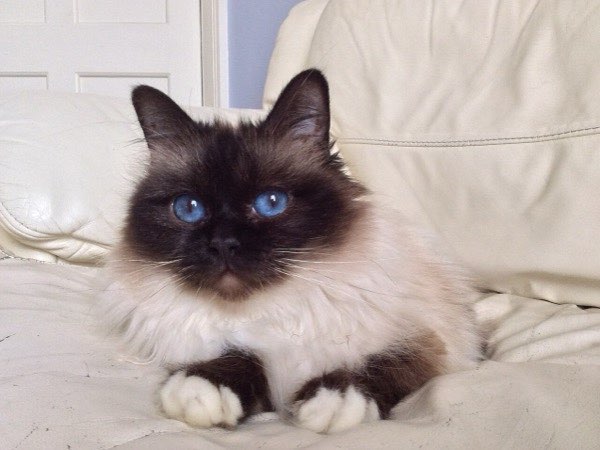
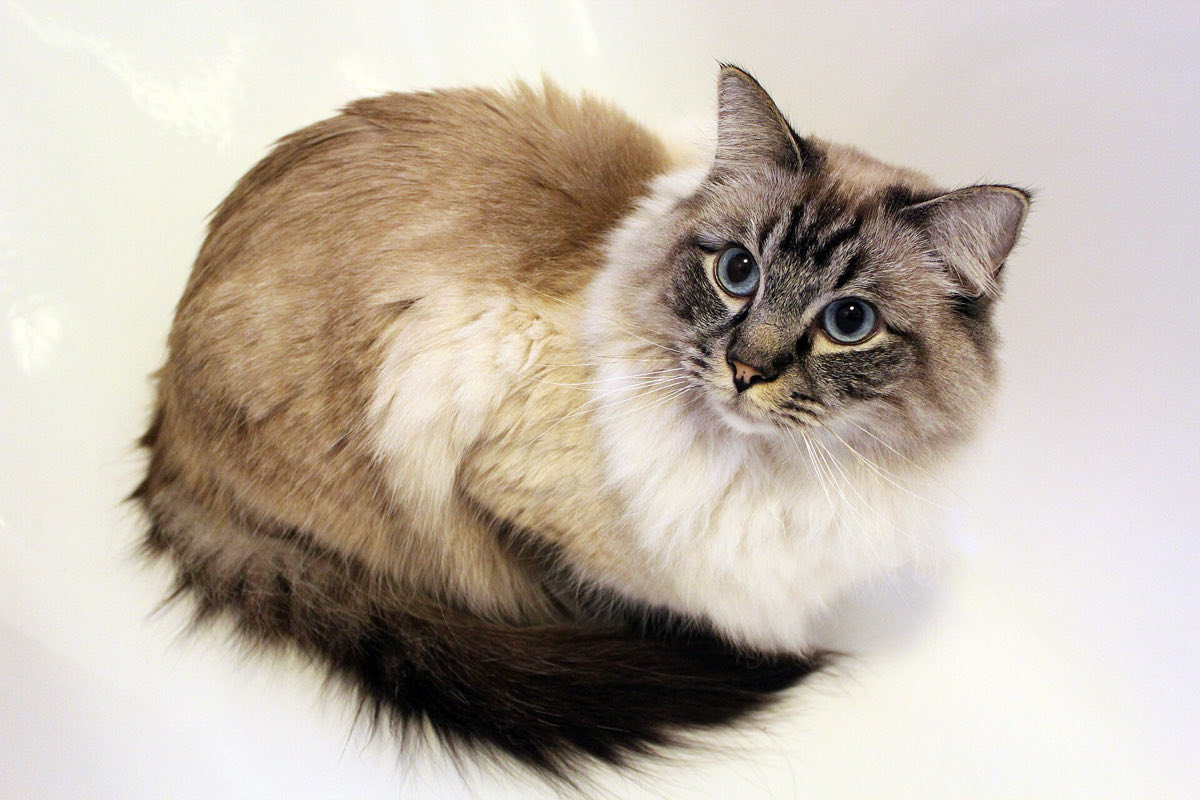
Every Ragdoll has blue eyes and a pointed coat, meaning the face, ears, legs and tail are darker than the body. Kittens are born white and develop their color over the first couple of years. There are three main patterns:
- Colorpoint: dark points with no white.
- Mitted: points with white "mittens" on the front feet, white boots on the back legs and a white chin and chest.
- Bicolor: points on the ears, mask and tail, with an inverted white "V" on the face and white legs and underside.
Colors include seal, blue, chocolate and lilac, as well as red and cream, with lynx (tabby) and tortie versions. The coat is semi-long and silky, with less of the dense, woolly undercoat that makes some longhairs mat so easily.
Temperament
The breed name comes from the tendency of many Ragdolls to relax and go floppy when picked up. Not every Ragdoll does this, and it doesn't mean they don't feel pain or can't be hurt. Always support a cat's chest and hindquarters when you lift it, especially a cat this size.
Ragdolls are generally calm, gentle, affectionate cats that like being with their people. Many greet family members at the door, follow them from room to room, and enjoy lying nearby or on a lap. They are usually playful but not hyperactive, and they tend to keep their feet on the ground more than many breeds, preferring a low perch to the top of the refrigerator. Their voices are typically soft.
Their easygoing nature makes many Ragdolls good companions for considerate children and calm, cat-friendly dogs. The same trusting nature is one reason most breeders and owners keep them indoors or give them secure outdoor access only, such as a catio. See our guide to indoor versus outdoor life.
Care needs
Grooming. Ragdoll coats mat less readily than Persian coats, but they still need attention. Comb through twice a week with a wide-toothed metal comb, focusing on the armpits, behind the ears, the belly and the britches, and more often during spring and fall shedding. Our grooming guide explains technique.
Gentle exercise. Because they are relaxed and large, Ragdolls can easily become overweight. Daily play sessions with a wand toy, food puzzles and sturdy, low-to-medium cat furniture help keep them moving.
Big-cat equipment. As with any large breed, choose a roomy litter box, a stable scratching post and a carrier big enough for an adult male.
Company. Ragdolls bond closely with their people and may be unhappy if left alone for very long hours every day. A second cat can help in a busy household.
Health considerations
Ragdolls are generally healthy, but there are some conditions to know about:
- Hypertrophic cardiomyopathy (HCM). A specific gene mutation associated with HCM has been identified in Ragdolls, and a DNA test is available. Responsible breeders test all breeding cats. Because HCM can have other causes, many also screen with echocardiograms.
- Urinary tract problems. Bladder stones and other lower urinary tract issues are reported in the breed. Encourage water intake with wet food and fountains, and learn the warning signs.
- Obesity, with its knock-on effects on joints and diabetes risk.
Ask breeders for the HCM DNA results of both parents. Whether you buy or adopt, discuss heart screening and urinary health with your veterinarian. More warning signs are in our health guide.
Who the Ragdoll suits
A Ragdoll is a lovely choice for people who want an affectionate, calm, sociable cat that enjoys being part of family life. It suits families with considerate children, multi-pet households, and people who are home a fair amount and want a cat that wants to be near them.
It may be less suited to someone who wants a very independent cat, who is away from home for long stretches, or who doesn't want to keep a cat indoors. Be prepared for the size, the grooming and a cat that will probably follow you to the bathroom.