Birman at a glance
- Origin
- Developed in France, 1920s; legend links it to Burma (Myanmar)
- Size
- Medium to large; stocky
- Typical weight
- About 7–12 lb
- Coat
- Semi-long and silky, with little undercoat
- Colors
- Pointed, with white gloves on all four feet; seal, blue, chocolate and lilac are classic, and some registries accept more
- Life expectancy
- Commonly 12–16 years
- Grooming needs
- Moderate
- Activity level
- Moderate
On this page
Origin and history
The Birman is often called the "Sacred Cat of Burma," and it comes with one of the most charming legends in the cat world. In the story, a temple cat sat beside a dying priest; when the goddess of the temple appeared, the cat's white coat turned golden, its eyes turned sapphire blue, and its paws, resting on the priest, stayed pure white as a sign of purity. It's a lovely tale, but it's a legend, not history.
The breed as we know it was developed in France in the 1920s, and its exact ancestry is unclear. It probably involved pointed cats and longhaired cats, and stories that the founding cats were smuggled from a temple in Burma are impossible to verify. The breed was nearly lost during the Second World War, when only a very small number of cats survived, and it was rebuilt by crossing with other longhaired and pointed breeds before breeders returned to the Birman type. Birmans reached Britain and the United States in the following decades and are now recognized by the major registries.
Appearance
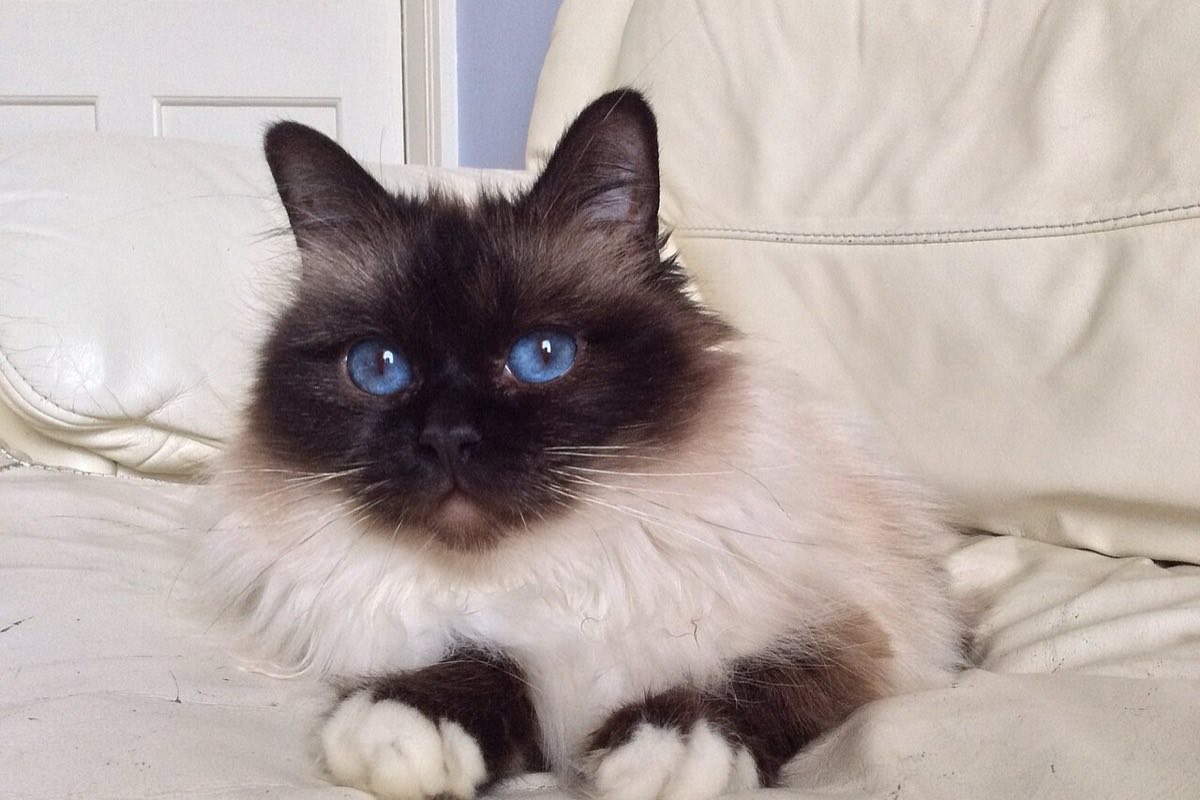
The Birman is a medium to large, stocky, long-bodied cat with strong legs, a broad, rounded head, a Roman (slightly curved) nose, medium-sized ears and round, deep blue eyes.
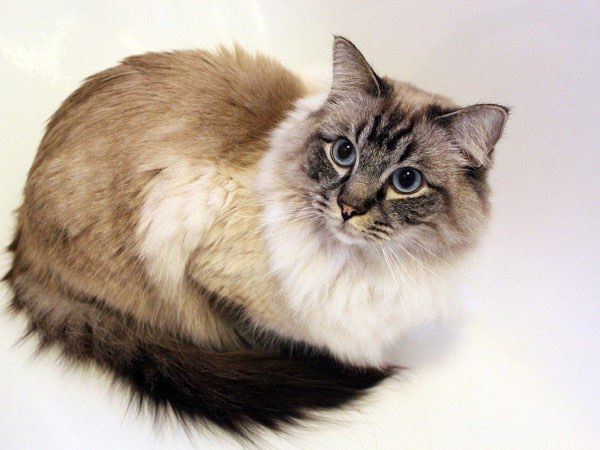
The coat is pointed, meaning the face mask, ears, legs and tail are darker than the body, which is usually a warm, pale cream or golden shade. What sets the Birman apart from other pointed breeds is its feet. Every Birman has white "gloves" on all four paws, and on the back legs the white extends up the back of the leg in a point called the "laces." Show breeders aim for symmetrical gloves, but pet Birmans with uneven markings make just as good companions.
Classic point colors are seal, blue, chocolate and lilac. Some registries also accept red, cream, tortie and tabby (lynx) points. The coat is semi-long and silky, with a full ruff around the neck and a bushy tail. It has little woolly undercoat, which makes it less prone to matting than many longhaired coats. Like other pointed cats, Birman kittens are born pale and develop color gradually.
Temperament
Birmans are generally gentle, affectionate, calm and sociable. They enjoy their people's company and often follow them around, but they are usually less demanding than very vocal pointed breeds such as the Siamese. Their voices tend to be soft.
Most Birmans are playful and curious without being hyperactive, and they are typically patient with considerate children and friendly with other cats and cat-friendly dogs. They often do well in multi-pet homes. Because they are sociable, many Birmans are happier with company and may not enjoy being left alone for very long hours every day. Individual personalities vary, of course.
Care needs
Grooming. A Birman's silky coat is relatively easy to care for for a longhair. A thorough comb-through once or twice a week usually prevents tangles, with extra attention to the armpits, belly, britches and behind the ears. Brush more often during seasonal shedding. Our grooming guide explains how.
Company and play. Daily interactive play, climbing space and puzzle feeders keep a Birman fit and content. In households where everyone is out all day, a second cat can be a good companion. See behavior and enrichment.
Weight and diet. Birmans can gain weight easily, particularly after spaying or neutering. Measure meals and ask your veterinarian to help you track body condition. See our feeding guide.
Dental care. Regular toothbrushing and dental checks are worthwhile, as for any cat.
Health considerations
Birmans are generally considered a healthy breed, but some conditions have been reported more often in them:
- Hypertrophic cardiomyopathy (HCM). As in many breeds, heart muscle thickening can occur. Responsible breeders may screen breeding cats by echocardiogram.
- Kidney disease. Chronic kidney disease is common in older cats of all breeds, and some kidney problems have been reported in Birman lines. Ask your veterinarian about blood and urine screening as your cat ages.
- Congenital hypotrichosis. A rare inherited condition in which kittens are born with little or no hair. A DNA test is available.
- Eye conditions, including corneal problems, have been reported occasionally.
Ask a breeder about the health history of the parents and any testing, and see our health guide for general warning signs. Increased thirst, increased urination, weight loss and poor appetite in an older cat all warrant a veterinary visit.
Who the Birman suits
A Birman is a lovely choice for people who want a gentle, sociable, affectionate cat with the beauty of a longhair but less grooming than a Persian. It suits families with considerate children, multi-pet homes and people who are home fairly often or can provide a feline companion.
It may be less suited to someone who wants a very independent cat or a high-energy athlete. If you're looking for a calm, people-loving cat that's easy to live with, the Birman deserves a close look, and Birmans and Birman mixes do sometimes turn up in rescues.