Everything to buy, set up and cat-proof before your new cat comes home, with notes on what each item is for and what you can safely skip. Tick items off as you go, or print the list.
You do not need a mountain of gear to welcome a cat. A handful of good basics, set up thoughtfully, matters far more than a cart full of gadgets. Items marked Essential are the ones we would want in place before day one; Nice to have items can wait until you know your cat's preferences.
Before day one
A few phone calls and decisions now make the first week far calmer.
Food and water
Keep feeding simple at first: the same food, measured meals, fresh water.
Litter
Litter box setup is the single biggest factor in avoiding house-soiling problems.
Comfort and safety
A secure cat is a calmer cat. Hiding places and height matter as much as a bed.
Play
Daily play keeps indoor cats fit and helps a nervous cat relax.
Grooming and health
A few basics let you get your cat used to handling from the start.
Cat-proof your home
Walk through each room at cat height. Cats get into far more than you expect.
Set up the safe room
Most cats settle faster if they start in one quiet room rather than the whole house. A spare bedroom, home office or large bathroom works well. Before your cat arrives, put everything they need in that room:
A litter box on one side of the room, and food and water on the other.
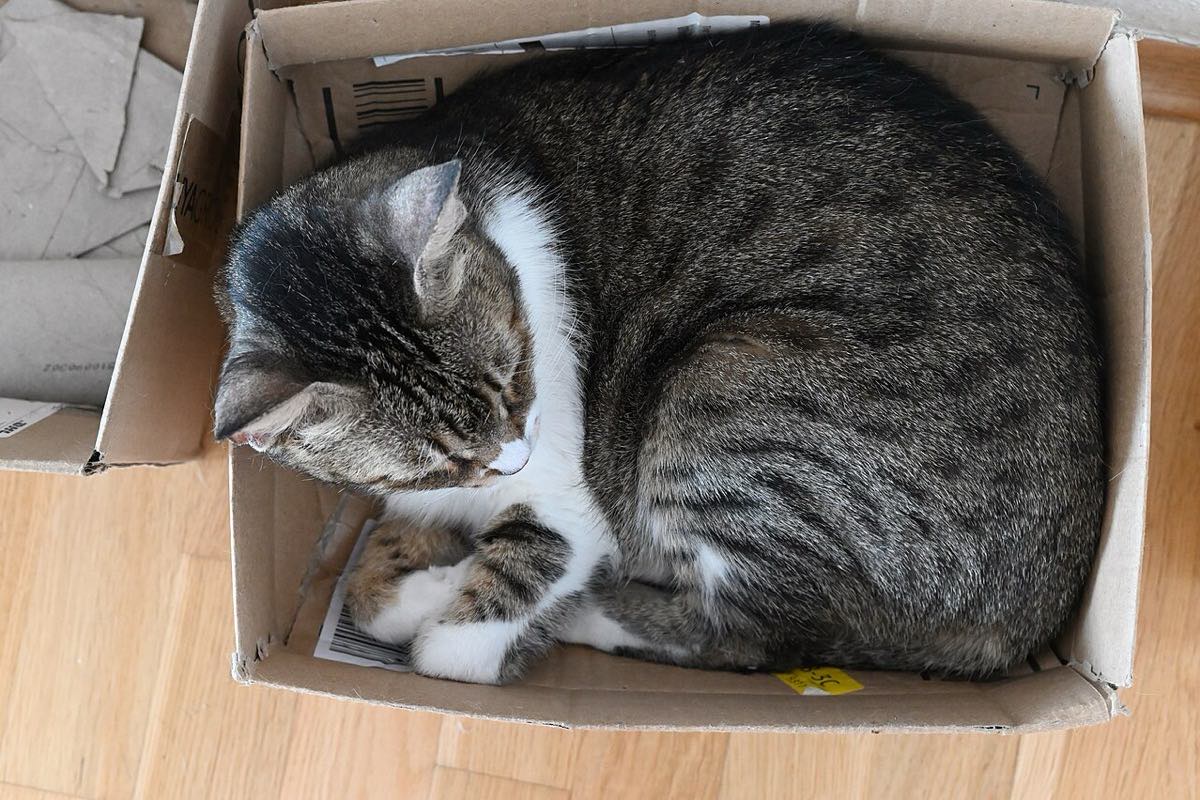
A hiding place, such as a covered bed or a cardboard box on its side.
A scratching post, a bed or blanket, and a couple of toys.
The open carrier, so your cat can retreat into something that smells familiar.
Check the room at floor level for gaps behind furniture or appliances, close the window or make sure the screen is secure, and remove anything breakable or dangerous. When your cat arrives, open the carrier in the safe room and let them come out in their own time. Our guide to the first week takes it from there.
What you can skip
Scented litter and litter deodorizers. Many cats dislike strong smells. A clean box is the best odor control.
An automatic, self-cleaning litter box on day one. The noise and movement can put a new cat off. If you want one, wait until your cat is settled, keep a regular box available and introduce it gradually.
Milk. Cats do not need it, and many adult cats cannot digest it well.
A huge pile of toys. A wand toy and a few small toys, rotated, beat a basketful your cat ignores.
Essential oil diffusers and plug-in air fresheners. Concentrated essential oils can be harmful to cats, and strong scents are stressful.
The Mittenwell Letter
One friendly email every other Sunday: a seasonal safety reminder, one care guide worth rereading, and a cat or two from our readers. Unsubscribe any time.