British Shorthair at a glance
- Origin
- Great Britain
- Size
- Medium to large; stocky and heavily boned
- Typical weight
- About 7–12 lb for females, 9–17 lb for males
- Coat
- Short, very dense and plush
- Colors
- Blue (gray) is classic; many other colors and patterns are accepted
- Life expectancy
- Commonly 12–15 years or more
- Grooming needs
- Low
- Activity level
- Low
On this page
Origin and history
The British Shorthair is descended from the everyday street, farm and household cats of Britain, which were probably brought to the British Isles centuries ago. In the late nineteenth century, cat fanciers began selecting the best of these sturdy, round-faced cats for showing, and British Shorthairs were among the cats exhibited at the first organized cat shows in England.
The breed came close to disappearing during and after the two World Wars, when breeding programs collapsed. To rebuild it, breeders crossed the remaining British cats with other breeds, particularly Persians, along with domestic shorthairs and other cats, before returning to the British type. This history explains both the breed's plush coat and some of the inherited conditions it shares with the Persian. The blue British Shorthair, sometimes simply called the "British Blue," remains the best-known version.
Appearance
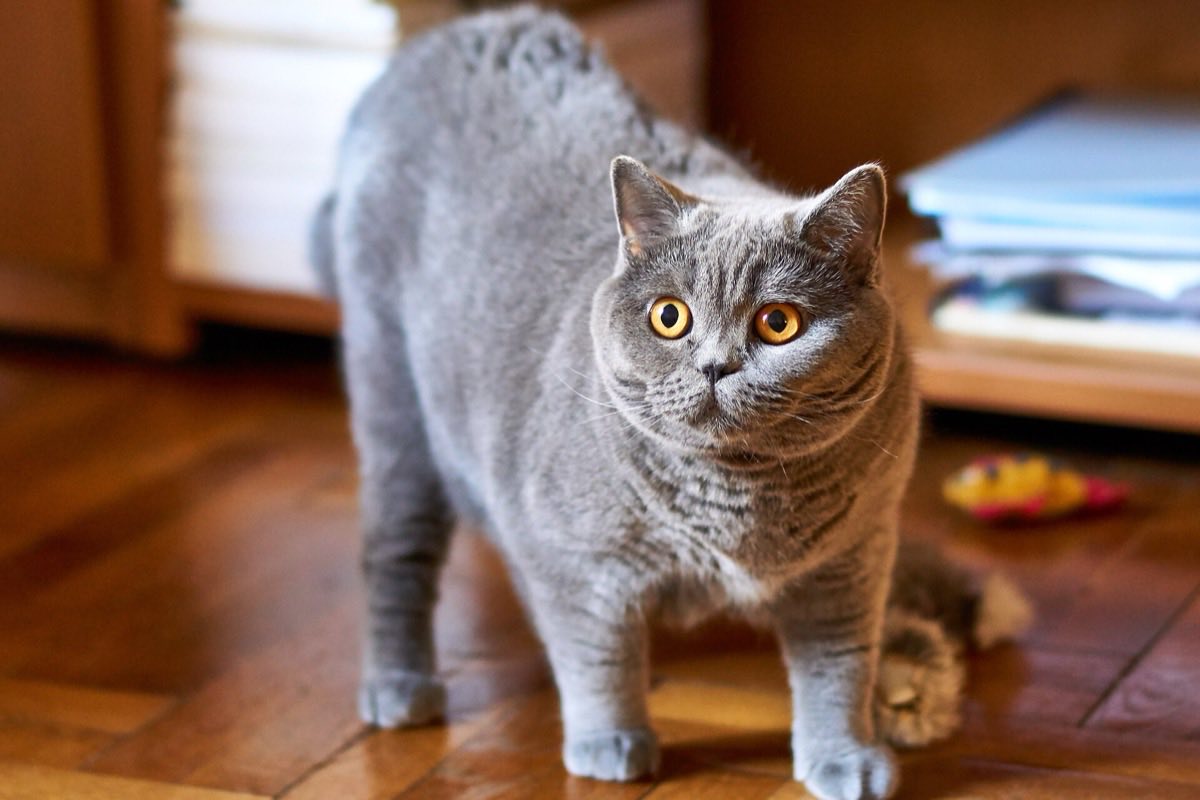
Everything about the British Shorthair is round and solid. It has a broad, rounded head with full cheeks (especially in mature males), a short, straight nose, small rounded ears set wide apart, and large round eyes. The body is compact and muscular, with a broad chest, short sturdy legs and a thick tail with a rounded tip.
The coat is short and extremely dense, standing slightly away from the body so that it feels crisp and plush, like a soft carpet, rather than lying flat. Blue cats usually have copper or gold eyes. Many other colors are accepted, including black, white, cream, lilac, chocolate, bicolors, tabbies, tortoiseshells and colorpoints. British Shorthairs mature slowly and may not reach their full size and cheeky look until they are three to five years old.
Temperament
British Shorthairs are generally calm, steady and easygoing. They tend to be affectionate and loyal without being clingy, and many prefer to sit next to you rather than on you. A lot of them dislike being picked up and carried, which is worth knowing if you have children who imagine a cat they can cuddle like a teddy bear. Teach children to let the cat come to them.
They are usually tolerant of other calm pets and adapt well to apartment life. Young British Shorthairs can be playful, but adults are often content with a couple of short play sessions a day and long naps in between. They are typically quiet cats with soft voices. They also tend to handle being alone during the workday better than very people-focused breeds, though no cat should be left without company for days at a time.
Care needs
Grooming. The dense coat needs only a weekly brush for most of the year, but it sheds heavily in spring and fall. During those periods, brush two or three times a week with a rubber grooming mitt or a fine comb to remove the loose undercoat. See our grooming guide.
Weight management. This is the breed's biggest everyday challenge. British Shorthairs are naturally stocky and relatively laid-back, so it's easy for them to become overweight, and their thick coat can hide extra pounds. Measure food rather than free-feeding, use puzzle feeders, and encourage daily play. Ask your veterinarian to assess body condition at every visit. Our feeding guide explains how.
Gentle encouragement to move. Wand toys, treat balls and low cat trees all help a less athletic cat stay active. Short, frequent sessions work better than one long one.
Health considerations
British Shorthairs are generally robust, but some conditions are seen more often in the breed:
- Hypertrophic cardiomyopathy (HCM). Thickening of the heart muscle that can lead to heart failure or blood clots. There is no single DNA test for HCM in British Shorthairs; screening is by echocardiogram, and many responsible breeders have their breeding cats scanned regularly.
- Polycystic kidney disease (PKD). Inherited through past outcrossing with Persians. A DNA test is available, and breeding cats should be tested.
- Obesity and the problems that follow it, including diabetes and arthritis.
- Blood type. A relatively high proportion of British Shorthairs have the less common blood type B. This matters for breeders, since mismatched matings can cause a fatal reaction in newborn kittens, and for any cat that might need a transfusion. Your veterinarian will blood-type before transfusion as a matter of routine.
When choosing a kitten, ask about PKD testing and heart screening of the parents. With an adult cat from a shelter, simply let your veterinarian know about the breed's predispositions. Sudden hind-leg weakness or paralysis, or labored breathing, can be signs of serious heart disease and need emergency care; see our health guide.
Who the British Shorthair suits
The British Shorthair is a great choice for people who want a calm, low-drama, low-grooming companion that is affectionate in a quiet way. It suits apartments, working singles and couples, older adults, and families whose children understand that this cat prefers sitting together to being carried around.
It's less suited to someone who wants a highly interactive, acrobatic or lap-glued cat. And because these cats love food and don't always love exercise, they need an owner who will be disciplined about portions.