Maine Coon at a glance
- Origin
- United States (Maine)
- Size
- Large; slow to mature
- Typical weight
- About 8–12 lb for females, 12–18 lb or more for males
- Coat
- Long, shaggy and water-resistant, shorter on the shoulders
- Colors
- Most colors and patterns; brown tabby is the classic look
- Life expectancy
- Commonly 12–15 years
- Grooming needs
- Moderate
- Activity level
- Moderate
On this page
Origin and history
The Maine Coon is one of the oldest natural breeds in North America. It developed on farms, in ports and aboard ships in New England, where cats earned their keep catching rodents through long, hard winters. Nobody knows exactly which cats founded the breed. The most likely explanation is that longhaired cats brought over by sailors and settlers mixed with local shorthaired cats, and the harsh climate favored big, sturdy animals with heavy coats.
Colorful stories claim the breed descends from raccoons (biologically impossible) or from Marie Antoinette's cats. These are folklore, though the raccoon legend probably explains the "Coon" in the name.
Maine Coons were popular at early American cat shows in the late 1800s; a brown tabby Maine Coon won top honors at a well-known show at Madison Square Garden in 1895. Their popularity dipped in the early twentieth century as Persians and other imported breeds became fashionable, but dedicated breeders kept the breed going, and the Cat Fanciers' Association granted it championship status in 1976. Today it is one of the most popular pedigree breeds in the United States.
Appearance
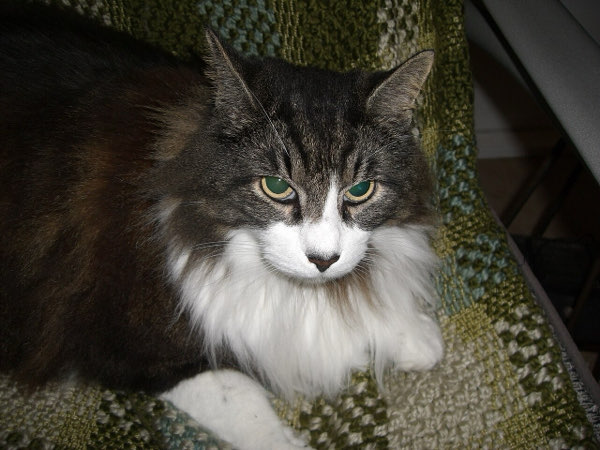
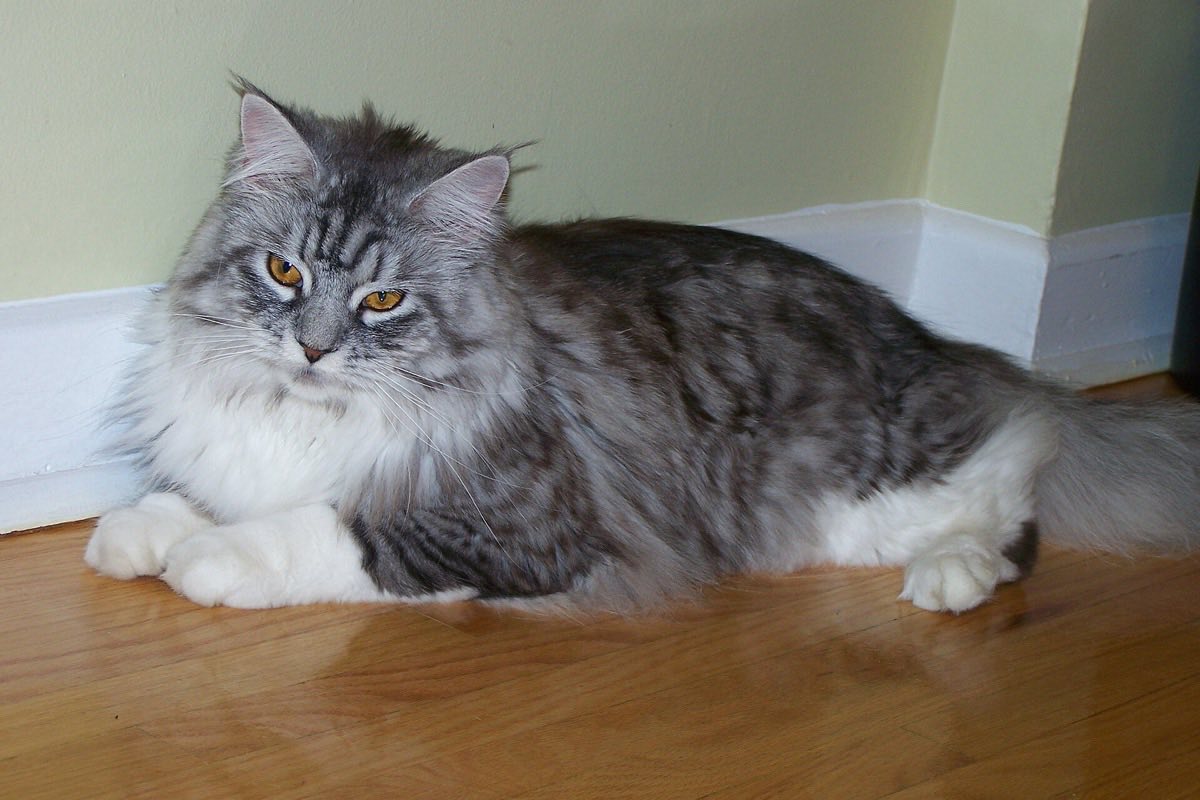
Size is the first thing people notice. Maine Coons are large, long-bodied, muscular cats with a rectangular shape, big paws and a long, bushy tail they often wrap around themselves when resting. Males are usually noticeably bigger than females. They are also slow to mature: many keep filling out until they are three to five years old.
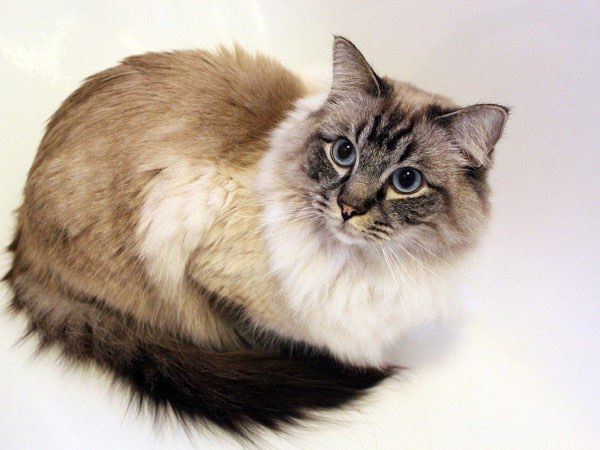
The head is slightly longer than it is wide, with high cheekbones, a squarish muzzle and large, tall ears that are often tipped with lynx-like tufts. The eyes are large and expressive and may be green, gold, copper or, in white cats, blue or odd-eyed.
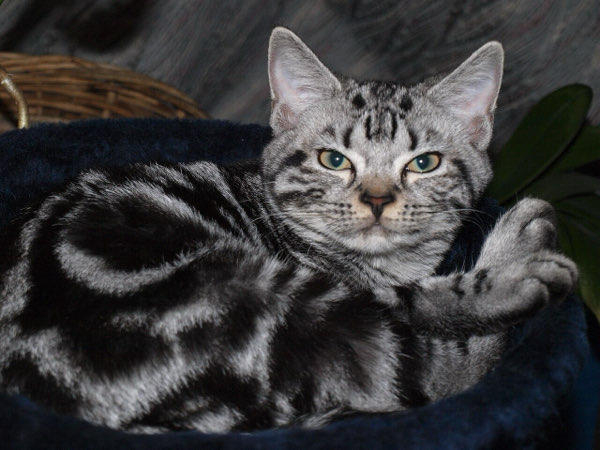
The coat is built for weather. It is heavy and silky, shorter over the shoulders and longer on the belly and "britches" (the back of the hind legs), with a ruff around the neck in many cats. The top layer sheds water, and there are tufts of fur between the toes. Almost any color and pattern is accepted, though the brown tabby remains the classic Maine Coon look.
Extra toes (polydactyly) were common in early Maine Coons. Some registries now accept polydactyl cats while others do not, and many breeders have bred away from the trait.
Temperament
Maine Coons are often called the "gentle giants" of the cat world, and the nickname is well earned. Most are friendly, relaxed and genuinely interested in people without being demanding. Many follow you from room to room, then settle nearby rather than on top of you.
They tend to be playful well into adulthood and are often described as dog-like: many learn to fetch, enjoy walking on a harness with patient training, and greet people at the door. Their voice is usually small for their size. Expect chirps, trills and soft chattering more than loud meowing.
Maine Coons generally get along well with considerate children and with other pets, including calm, cat-friendly dogs, especially when introductions are done slowly. Many are fascinated by water and may dip their paws in bowls or join you in the bathroom. As always, individual cats vary, and a cat's early life and socialization matter as much as its breed.
Care needs
Grooming. Despite the long coat, a Maine Coon's fur is less prone to matting than a Persian's. Most do well with a thorough comb-through two or three times a week, using a wide-toothed metal comb followed by a slicker brush. Pay attention to the belly, armpits and britches, where tangles form first. Expect heavier shedding in spring. Our grooming guide covers technique and how to make it pleasant for your cat.
Space and furniture. Big cats need big equipment. Choose a sturdy, tall scratching post that won't wobble, a cat tree rated for heavier cats and a large litter box. Many standard litter boxes are simply too small for an adult male Maine Coon; a large storage tote with an entry cut into one side works well.
Exercise and play. Daily interactive play keeps them fit and content. Wand toys, food puzzles and climbing space all help. See our guide to behavior and enrichment for ideas.
Diet. Because they grow for several years, Maine Coons can look underweight or "gangly" as adolescents and then become overweight later if portions aren't adjusted. Ask your veterinarian to help you track body condition rather than relying on the number on the scale alone. Our feeding guide explains how to judge portions.
Health considerations
Maine Coons are generally sturdy cats, but the breed is known to be predisposed to a few inherited conditions:
- Hypertrophic cardiomyopathy (HCM). A thickening of the heart muscle and the most common heart disease in cats. One specific genetic mutation linked to HCM has been identified in Maine Coons, and a DNA test is available. A negative test does not rule out HCM, which can have other genetic causes, so many breeders also have their cats screened by echocardiogram (heart ultrasound).
- Hip dysplasia. Malformed hip joints are seen more often in Maine Coons than in most cats, possibly because of their size. Affected cats may be stiff or reluctant to jump. Keeping your cat lean helps protect the joints.
- Spinal muscular atrophy (SMA). An inherited condition that causes muscle weakness in the hind legs, usually noticed in young kittens. A DNA test exists, and responsible breeders test for it.
- Polycystic kidney disease (PKD). Reported occasionally; ask your breeder about screening.
If you are buying a kitten, ask the breeder which tests the parents have had and to see the results. If you are adopting, tell your veterinarian your cat may be part Maine Coon and ask whether any screening makes sense. Signs such as rapid or labored breathing, open-mouth breathing, sudden weakness or dragging of the back legs are emergencies; our health guide lists other warning signs.
Who the Maine Coon suits
A Maine Coon is a wonderful fit for people who want an affectionate, sociable and fairly adaptable cat and who have room for a big animal and its big equipment. They suit families with considerate children, multi-pet households and people who are home often enough to give them company and play.
They may be less suited to very small apartments with no vertical space, or to anyone who wants a low-maintenance coat. Their size also makes everything a little more expensive: bigger carriers, bigger litter boxes, more food. If you love the look, check shelters and breed rescues too; many large, fluffy, Maine Coon-type cats are waiting for homes.