Norwegian Forest Cat at a glance
- Origin
- Norway
- Size
- Large; slow to mature
- Typical weight
- About 9–12 lb for females, 12–16 lb or more for males
- Coat
- Semi-long double coat with a water-resistant topcoat and woolly undercoat
- Colors
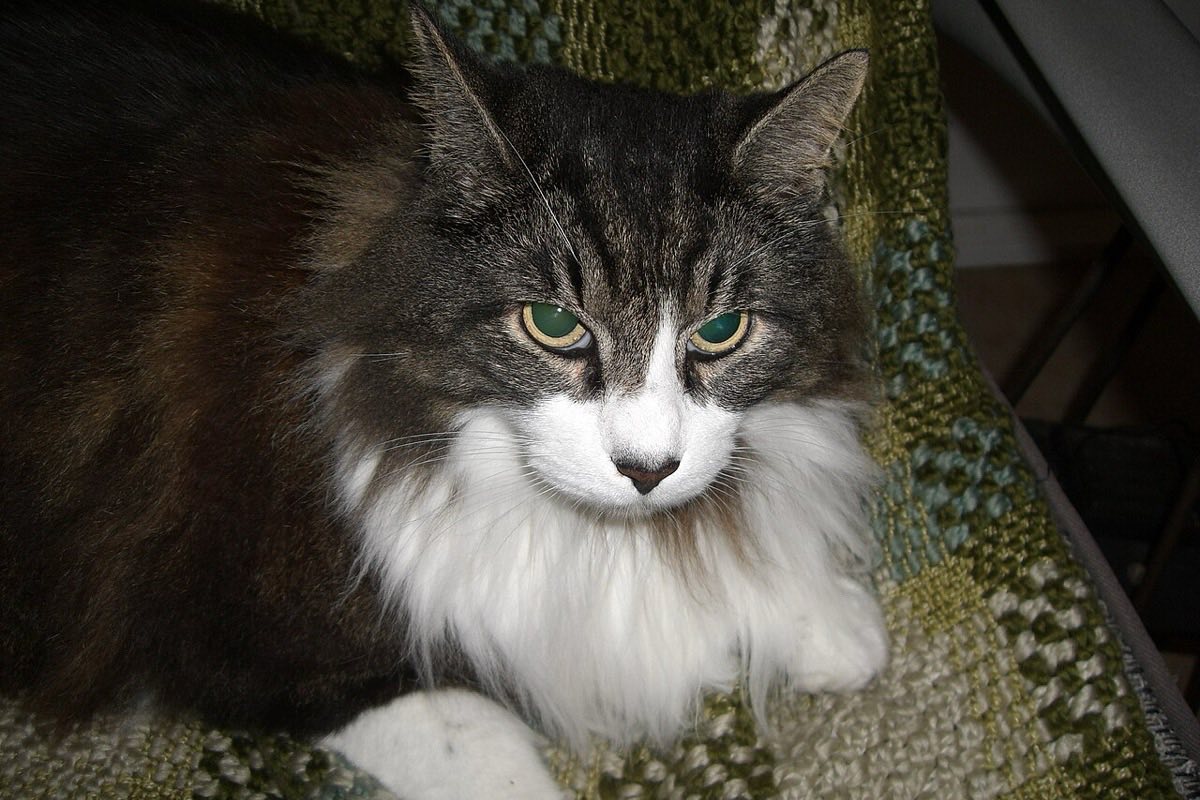
- Most colors and patterns; brown tabby and white is common
- Life expectancy
- Commonly 12–16 years
- Grooming needs
- Moderate (high in shedding season)
- Activity level
- Moderate
On this page
Origin and history
Known in Norway as the skogkatt ("forest cat"), the Norwegian Forest Cat is a natural breed that developed over centuries in the cold climate of Scandinavia. Longhaired cats with thick, weatherproof coats appear in Norwegian folk tales as mountain-dwelling, cliff-climbing cats, and the breed is often linked in popular stories with the cats said to pull the chariot of the Norse goddess Freya. How and when longhaired cats first arrived in Norway is unknown; they may have come with traders or Viking-era travelers and adapted to the harsh environment.
Organized breeding began in Norway in the 1930s, but the Second World War interrupted it, and by the postwar years the native forest cat was at risk of disappearing through crossbreeding with other domestic cats. Norwegian enthusiasts set up a breeding program to preserve it, and in 1977 the breed was recognized by FIFe, the European cat federation. It arrived in the United States in the late 1970s and has since been recognized by all the major North American registries.
Appearance
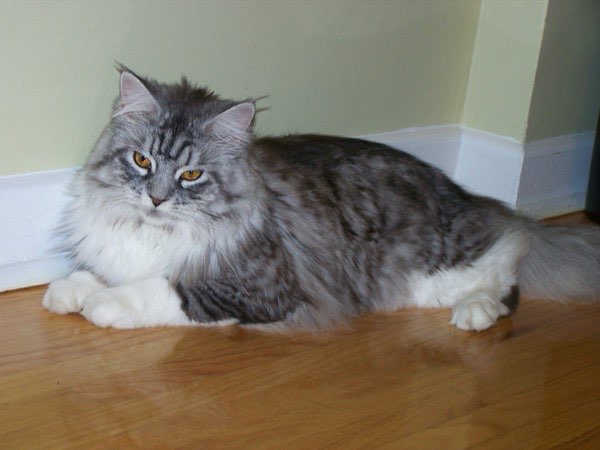
The Norwegian Forest Cat is a large, sturdy, muscular cat with a long body, substantial bone structure and hind legs that are slightly longer than the front, which helps make it a powerful climber. Like the Maine Coon, it matures slowly, often taking up to five years to reach its full size and coat.
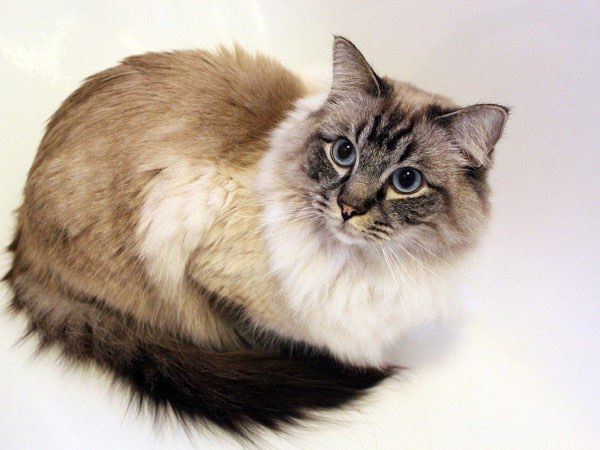
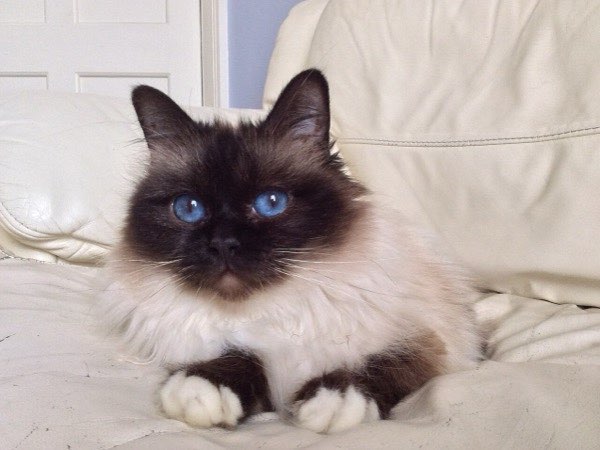
The head is an equilateral triangle with a long, straight profile from brow to nose tip, a key difference from the Maine Coon, which has a gentle curve. The ears are large, tufted and set to follow the lines of the triangle, and the eyes are large and almond-shaped, in shades of green, gold or copper (or blue or odd-eyed in white cats).
The coat is built for snow and rain: a dense, woolly undercoat topped by long, glossy, water-resistant guard hairs. Most cats have a full ruff at the neck, "britches" on the back legs, tufted toes and a long, bushy tail. Most colors and patterns are accepted, and brown tabby with white is especially common.
Temperament
Norwegian Forest Cats are generally friendly, calm, confident and adaptable. Most enjoy the company of their people and are affectionate on their own terms, often preferring to sit beside you rather than be held for long. They are typically gentle with considerate children and get along well with other pets.
Climbing is a big part of their character. Many love the highest perch in the house, whether that's the top of a tall cat tree, a bookcase or the refrigerator, and they are agile and sure-footed despite their size. They are playful and inquisitive but usually less frantic than very high-energy breeds, and many are content to entertain themselves for a while when their people are busy. Their voices tend to be soft and used sparingly.
Care needs
Grooming. For much of the year, a thorough comb-through once or twice a week keeps the coat in good condition. But in spring, most Norwegian Forest Cats shed their dense winter undercoat in large quantities, sometimes called "blowing" the coat. During that time, comb every day or two to prevent mats and reduce hairballs. Focus on the armpits, behind the ears and the britches. See our grooming guide.
Vertical space. Provide tall, very sturdy cat trees and wall shelves, ideally anchored so they can't tip with a large cat on top. A heavy, tall scratching post is essential.
Large equipment. As with other big breeds, choose a large litter box and a roomy carrier.
Indoor life and safe outdoor access. Many owners provide a catio or secure garden enclosure, which suits this outdoors-loving breed well. See indoor versus outdoor.
Health considerations
The Norwegian Forest Cat is generally robust, but several inherited conditions have been identified:
- Glycogen storage disease type IV (GSD IV). A rare, serious inherited metabolic disease that is specific to the breed. Most affected kittens die around birth or shortly after; others develop severe muscle problems a few months later. A DNA test is available, and responsible breeders test all breeding cats so that affected kittens aren't produced.
- Hypertrophic cardiomyopathy (HCM). Heart muscle thickening, screened for by echocardiogram.
- Hip dysplasia. Reported in larger breeds including the Norwegian Forest Cat. Keeping your cat lean protects the joints.
- Kidney disease, including polycystic kidney disease, has been reported occasionally.
Ask a breeder for GSD IV DNA results and heart screening records for both parents, and discuss any recommended screening with your veterinarian. Our health guide describes signs that need urgent attention.
Who the Norwegian Forest Cat suits
A Norwegian Forest Cat suits people who want a friendly, sturdy, adaptable cat that's affectionate without being clingy, and who have room for tall climbing furniture. It's a good choice for families with considerate children, multi-pet homes and people who work regular hours.
It may be less suited to owners who can't keep up with seasonal grooming or who don't want fur on everything for several weeks each spring. If you want a smaller, lower-shedding cat that stays on the ground, look at other breeds.