Siamese at a glance
- Origin
- Thailand (formerly Siam)
- Size
- Medium; long and slender
- Typical weight
- About 6–12 lb
- Coat
- Short, fine and close-lying
- Colors
- Pointed pattern; seal, chocolate, blue and lilac points are traditional, with more point colors accepted by some registries
- Life expectancy
- Commonly 12–15 years or more
- Grooming needs
- Low
- Activity level
- High
On this page
Origin and history
Pale cats with dark faces, ears, legs and tails have been prized in Thailand for centuries. Old Thai manuscripts known as the Tamra Maew, or cat-book poems, describe and illustrate a number of cat types, including a pointed cat called the Wichienmaat, which is widely regarded as the ancestor of the Siamese.
Siamese cats reached Britain and the United States in the late nineteenth century and were shown at some of the earliest cat shows in England in the 1870s. They quickly became fashionable. Over the twentieth century, show breeders gradually selected for a longer, finer body and a more wedge-shaped head, producing the "modern" Siamese seen in show rings today. Some breeders and owners prefer the older, rounder type, often called "traditional," "old-style" or "applehead" Siamese, and some registries recognize this type separately under the name Thai.
Appearance
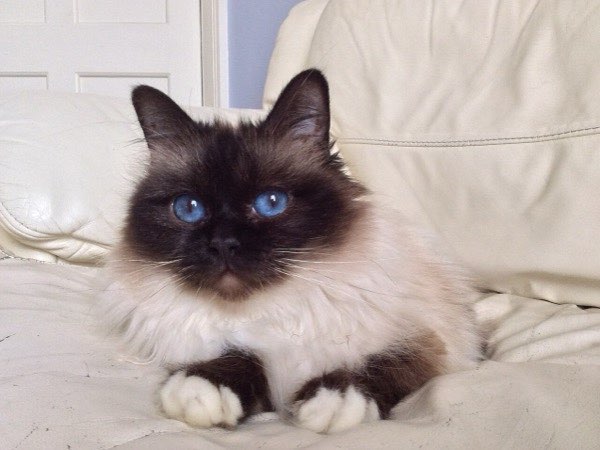
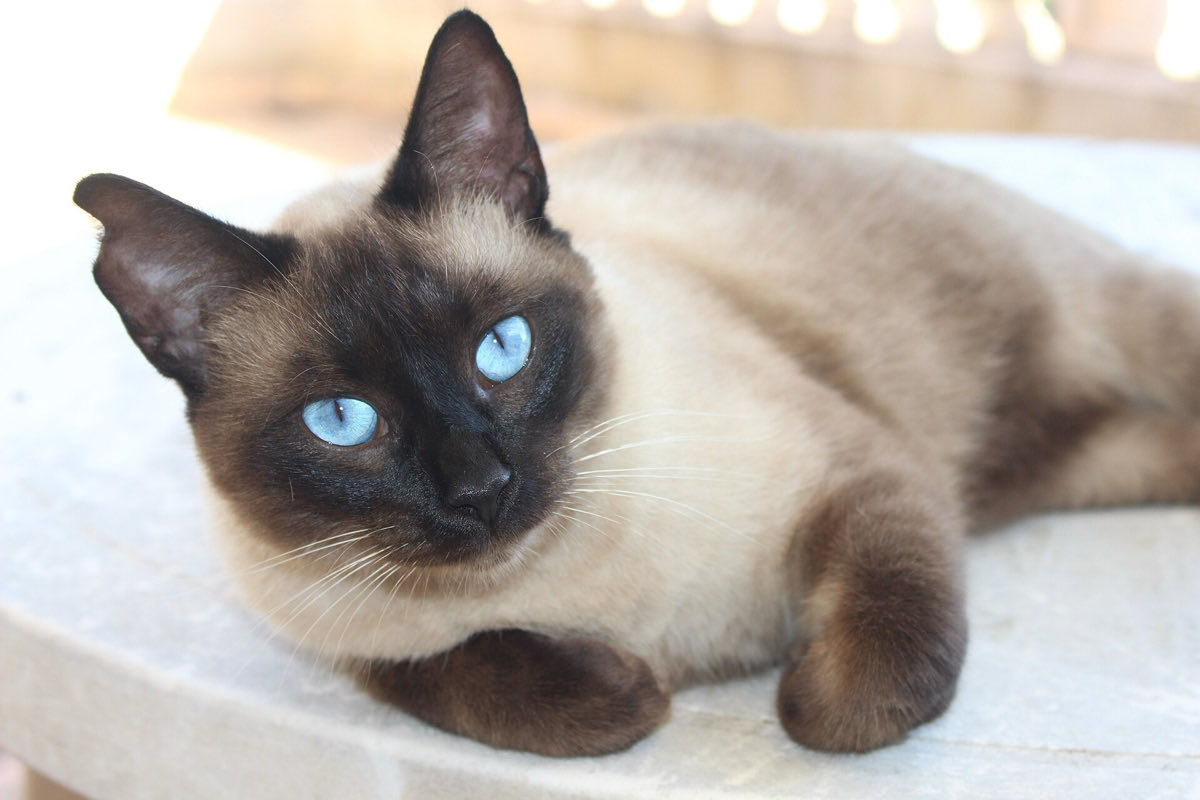
The Siamese coat pattern is called "pointed" or "colorpoint." It comes from a temperature-sensitive form of the enzyme that produces pigment: color develops only on the cooler parts of the body, so the face mask, ears, legs, feet and tail are darker than the body. Kittens are born almost white and develop their points over the first weeks and months. Siamese cats often darken with age, and a cat that lives somewhere cold, or has a patch of fur shaved for a vet procedure, may develop darker fur in those areas.
The eyes are always blue, usually a vivid sapphire. Body type depends on the line. Modern show Siamese are long, lean and fine-boned, with a long tail, large ears and a wedge-shaped head. Traditional-type cats are more moderate, with a rounder head and a sturdier build.
The four classic point colors are seal (dark brown), chocolate, blue (gray) and lilac (pinkish gray). Registries differ on other colors: some include red, cream, tortie and tabby ("lynx") points as Siamese, while others register them under a separate name such as Colorpoint Shorthair.
Temperament
If you want a quiet cat, look elsewhere. Siamese are known for their loud, distinctive, almost conversational voices, and many will "talk" to you throughout the day: to ask for food, to greet you, to comment on the weather. Owners usually find this either delightful or exhausting, so it's worth meeting a few adult Siamese before committing.
They are intensely social and form strong bonds with their people. Many follow their humans everywhere, want to be involved in whatever is happening and like to sleep close by. They are clever, curious and quick to learn, which means they can be trained to do tricks or walk on a harness but also that they learn to open cupboards.
The flip side of this devotion is that many Siamese do poorly when left alone for long periods. A bored or lonely Siamese may become noisy, destructive or anxious. Many owners find that a second, similarly active cat helps. Some Siamese and Siamese-type cats develop a habit of sucking or chewing fabric; if your cat eats non-food items, talk to your veterinarian, as swallowed fabric can cause a dangerous intestinal blockage.
Care needs
Grooming. The short, fine coat needs very little help. A weekly once-over with a soft brush or a grooming mitt removes loose hair and doubles as bonding time.
Company and stimulation. This is the real care requirement. Plan for daily interactive play, climbing space, puzzle feeders and plenty of attention. Rotating toys keeps things interesting. Our guide to behavior and enrichment has practical ideas.
Warmth. With little undercoat, many Siamese seek out warm spots. A heated pad designed for pets, a sunny window perch or a fleece-lined bed is appreciated.
Dental care. Daily toothbrushing with a cat toothpaste is the gold standard for any cat, and it's especially worth starting early with a Siamese. See our health and vet care guide.
Health considerations
Siamese are often long-lived, but the breed is associated with several inherited or predisposed conditions:
- Progressive retinal atrophy (PRA). A form of inherited retinal degeneration shared with the Abyssinian can cause gradual vision loss. A DNA test is available, and responsible breeders use it.
- Amyloidosis. Abnormal protein deposits, in Siamese most often in the liver, can lead to organ damage. It is uncommon but serious.
- Respiratory disease. Siamese and other Oriental breeds appear to be more prone to feline asthma. Coughing, wheezing or breathing with effort needs a vet visit; open-mouth breathing is an emergency.
- Dental disease. Gum disease and tooth problems are common in cats generally and seem to be a particular issue in some Siamese lines.
- Crossed eyes and kinked tails. Once common in the breed, these are now largely bred out of show lines. Crossed eyes (strabismus) are linked to the way the Siamese gene affects the visual pathways; they usually don't bother the cat.
Ask a breeder about PRA testing and the health history of the parents, and talk to your veterinarian about screening and dental care as your cat ages.
Who the Siamese suits
A Siamese is a great match for people who want a highly interactive, affectionate cat and who are home a lot, or who can offer a feline companion. They suit households that enjoy conversation (literally) and don't mind a cat that wants to be involved in everything.
They are less suited to anyone who needs peace and quiet, who lives in an apartment with thin walls and sensitive neighbors, or who works long hours away from home with no other pets. Siamese and Siamese mixes turn up regularly in shelters and breed rescues, and an adult cat whose voice and personality you can meet in advance is often an excellent choice.