Devon Rex at a glance
- Origin
- England (Devon), 1960
- Size
- Small to medium; slender
- Typical weight
- About 5–10 lb
- Coat
- Short, soft, wavy or curly, sometimes sparse
- Colors
- Any color or pattern
- Life expectancy
- Commonly 12–15 years or more
- Grooming needs
- Low to moderate (gentle care)
- Activity level
- High
On this page
Origin and history
The Devon Rex began with a single curly-coated kitten named Kirlee, born in 1960 in Buckfastleigh, in the county of Devon in southwest England. His mother was a stray, and his father was believed to be a curly-coated feral tom living near an old tin mine. Kirlee's owner, Beryl Cox, had read about another curly-coated breed, the Cornish Rex, which had appeared in neighboring Cornwall a decade earlier, and contacted Cornish Rex breeders.
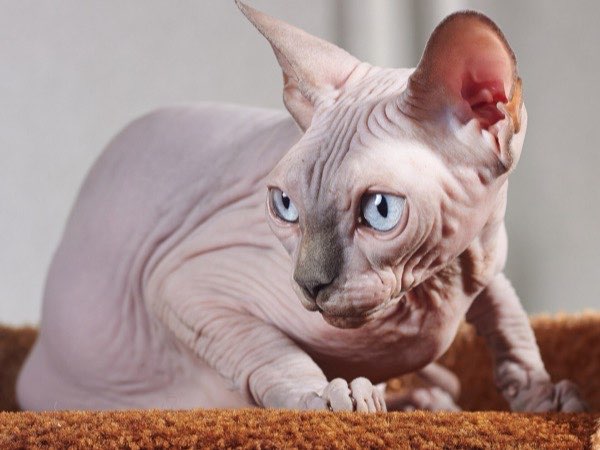
When Kirlee was mated with Cornish Rex cats, the kittens all had straight coats. That showed the two curly coats were caused by different genes. The Devon Rex was developed as a separate breed, and it is now recognized by all the major registries. The gene behind the Devon's coat is a variant of the same gene responsible for the hairlessness of the Sphynx.
Appearance
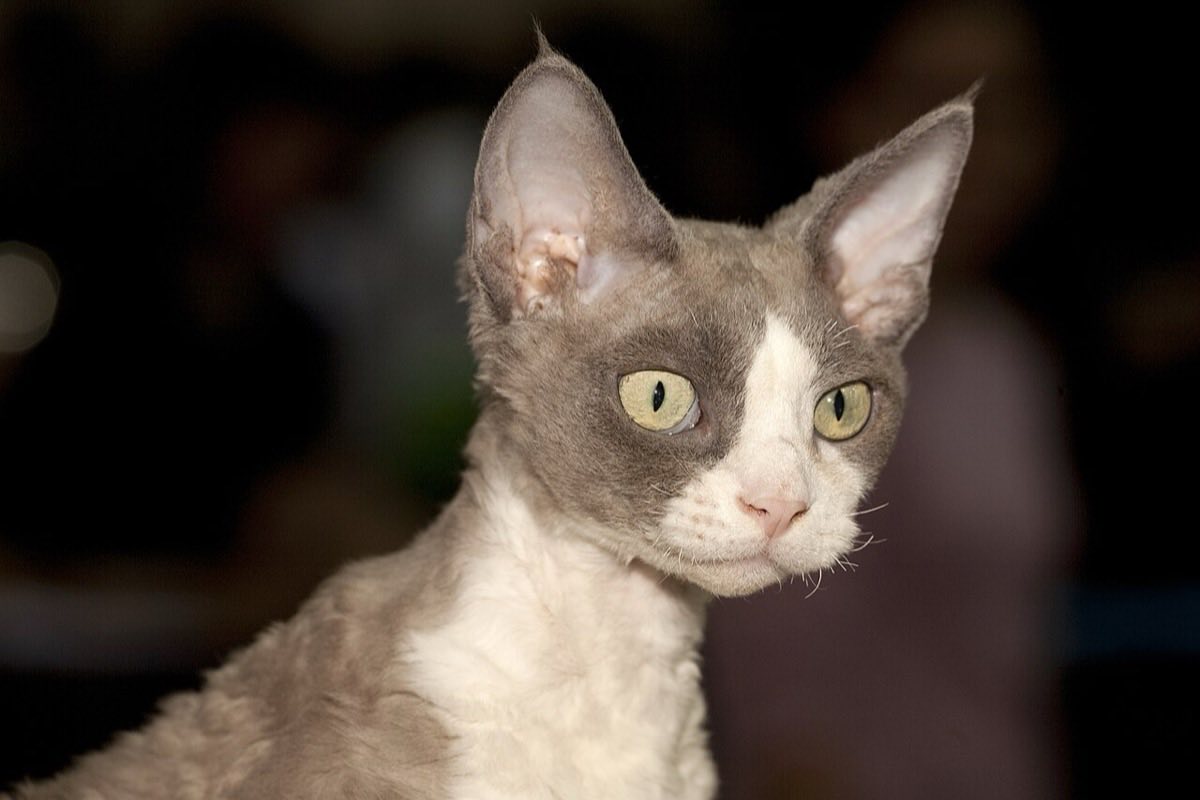
The Devon Rex has an unmistakable, elfin look: a short, wedge-shaped head with prominent cheekbones, a short muzzle, a pronounced "stop" at the nose, very large, low-set ears and big, oval eyes. The body is slender but surprisingly sturdy and muscular, with a broad chest, long legs and a long, fine tail.
The coat is short, very soft and wavy or loosely curled. Devon Rex hair is fragile and can break easily, so some cats have thin or sparse patches, particularly on the chest, belly and sides, and whiskers are often short, curly or brittle. Any color or pattern is possible.
Temperament
Devon Rex cats are known for being lively, playful, mischievous and very people-oriented. Many love to perch on shoulders, snuggle under blankets, sit on laps and generally be wherever their people are. They are curious, agile climbers and jumpers and often stay kittenish into adulthood. Some learn tricks and fetch, and many are keenly interested in food (yours included).
They are usually sociable with visitors, considerate children, other cats and cat-friendly dogs. The flip side is that a Devon Rex generally doesn't like being alone for long periods and may become bored or unhappy without company. Their voices are usually fairly quiet.
Care needs
Gentle grooming. The Devon's coat sheds relatively little but is delicate. Vigorous brushing can break the hair, so use your hand, a soft cloth, a soft rubber mitt or a very soft brush. Some Devons get oily skin, especially in areas with sparse hair, and may benefit from an occasional bath with a gentle cat shampoo. Ask your veterinarian how often is right for your cat.
Ears and paws. Those big ears collect wax. Check them weekly and clean gently with a vet-recommended ear cleaner if needed. Wax can also build up in the nail folds; clean gently when you trim the nails.
Warmth. With a thin coat, many Devons feel the cold. Offer warm, cozy beds, fleece blankets and sunny spots, and keep the house comfortably warm.
Play and company. Provide daily interactive play, climbing furniture and puzzle feeders. See our guide to behavior and enrichment.
Food management. Devons are often enthusiastic eaters and can become overweight. Measure meals and keep human food out of reach.
Health considerations
- Hereditary myopathy (Devon Rex myopathy). An inherited condition causing muscle weakness, often first seen in kittens. Signs can include weakness that gets worse with exercise or excitement, a drooping head and neck with shoulder blades that stick up, and, importantly, trouble swallowing, which can lead to choking. A DNA test is available, and responsible breeders test their cats.
- Hypertrophic cardiomyopathy (HCM). Heart muscle thickening; ask breeders about echocardiogram screening.
- Kneecap problems (patellar luxation) and hip dysplasia have been reported in the breed.
- Skin and ear issues, including yeast overgrowth, are more common, partly because of oily skin and large ear canals.
- Blood type. A relatively high proportion of Devon Rex cats have blood type B, which matters for breeding (mismatched litters can suffer a fatal reaction) and for transfusions. Veterinarians routinely blood-type before transfusing.
Ask a breeder for DNA and screening results for both parents. A cat that coughs, gags or chokes when eating, or that has trouble breathing, needs prompt veterinary care. See our health guide.
Who the Devon Rex suits
A Devon Rex is a great fit for people who want a highly affectionate, playful and entertaining cat that wants to be involved in daily life. It suits families with considerate children, multi-pet households and people who are home a lot or can provide a feline companion.
It may be less suited to anyone who wants a quiet, independent cat, who's away for long hours, or who wants a cat that keeps its feet on the floor. Expect a constant, cheerful shadow.