Abyssinian at a glance
- Origin
- Uncertain; developed largely in Britain
- Size
- Medium; lean and muscular
- Typical weight
- About 6–10 lb
- Coat
- Short, fine and ticked (each hair banded with color)
- Colors
- Ruddy, red (sorrel), blue and fawn; some registries accept others
- Life expectancy
- Commonly 12–15 years
- Grooming needs
- Low
- Activity level
- High
On this page
Origin and history
The Abyssinian's history is a puzzle. The name refers to Abyssinia, now Ethiopia, and a cat named Zula, said to have been brought to Britain from there in the late 1860s, is often named as an early ancestor. Whether Zula really contributed to the breed is unknown. Genetic research suggests the breed's roots more likely lie around the coast of the Indian Ocean and parts of Southeast Asia, and the Abyssinian as we know it was largely developed by British breeders in the late nineteenth and early twentieth centuries.
The breed's resemblance to cats in ancient Egyptian art has encouraged romantic theories about its origins, but there's no evidence linking modern Abyssinians directly to Egypt. Abyssinians were among the breeds exhibited at early cat shows and are now recognized by all the major registries. The Somali is essentially a longhaired Abyssinian.
Appearance
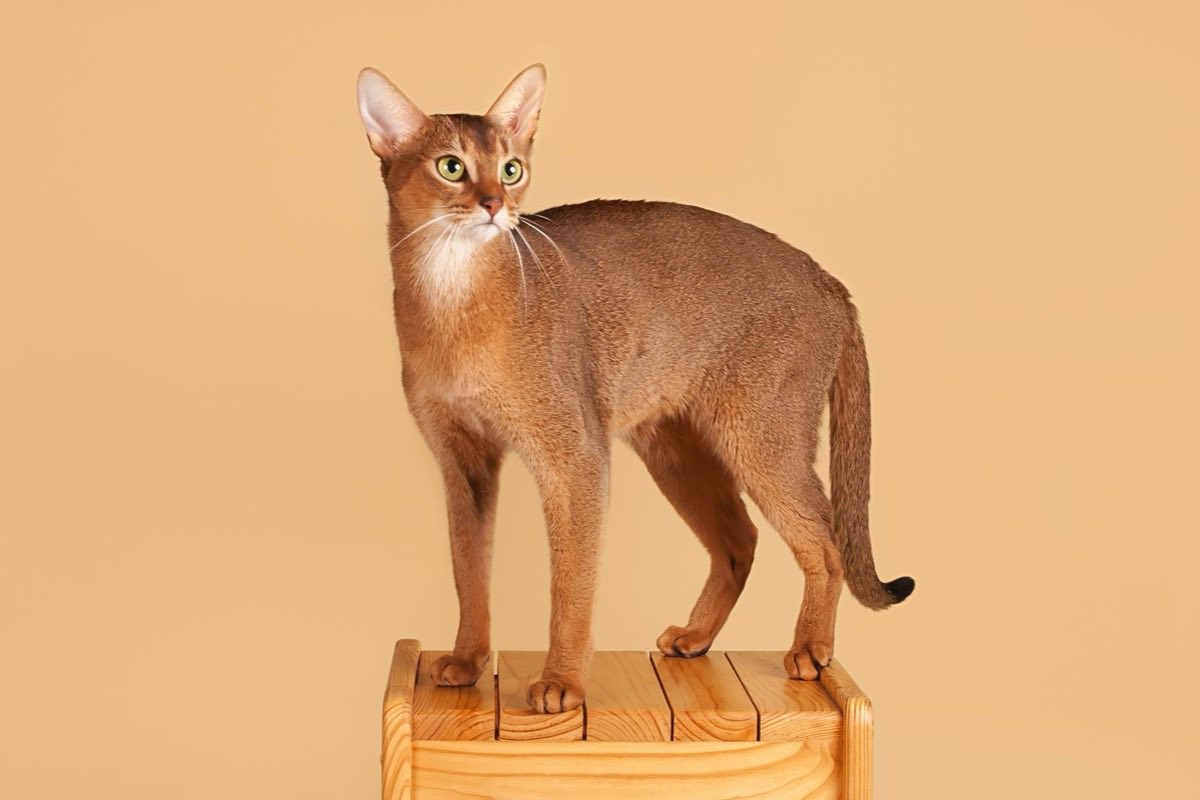
The Abyssinian is a medium-sized, lithe, muscular cat with an arched back, long slender legs and small oval paws, giving it the look of a small wild cat ready to spring. The head is a gently rounded wedge with large, alert, cupped ears and almond-shaped eyes in gold, green or hazel, rimmed with dark "eyeliner."
The coat is what makes an Abyssinian instantly recognizable. It is short, fine and close-lying, and each hair is "ticked," meaning it has alternating bands of light and dark color. The overall effect is a warm, glowing coat with no stripes or spots on the body, though there may be faint markings on the face. The classic color is ruddy (a warm brown with black ticking). Red (also called sorrel), blue and fawn are widely accepted, and some registries accept other colors as well.
Temperament
Abyssinians are active, intelligent and intensely curious. They want to know what you're doing, what's in the bag you just brought home and what's on top of the bookcase. Many love heights and will patrol the tops of doors and cabinets. They're playful throughout life and often enjoy fetch, puzzle toys and clicker training.
Most are affectionate and people-oriented, but in an active way. An Abyssinian is more likely to supervise from your shoulder or the back of your chair than to lie in your lap for an hour. They tend to have soft, quiet voices. Abyssinians usually get along well with considerate children and other active pets, and many enjoy having a feline playmate. They can become bored, frustrated or destructive if left alone with nothing to do for long periods.
Care needs
Enrichment. This is the most important part of Abyssinian care. Provide tall, stable cat trees and wall shelves, window perches, a rotating supply of toys, food puzzles and two or more interactive play sessions every day. See our guide to behavior and enrichment.
Grooming. The short, ticked coat is easy to maintain with a weekly brush or rub with a grooming mitt. Trim nails regularly.
Dental care. Gum disease is a recognized problem in the breed, so start toothbrushing early and keep up with dental checks at your veterinarian's office.
Safety. These cats are excellent climbers and escape artists. Secure window screens, keep cupboards with cleaning products latched, and see our guide to household dangers.
Health considerations
Abyssinians are associated with several inherited conditions, some of which can be tested for:
- Progressive retinal atrophy (PRA). Two inherited forms of retinal degeneration have been identified in Abyssinians and related breeds, causing gradual vision loss. DNA tests are available, and responsible breeders use them.
- Pyruvate kinase deficiency (PK deficiency). An inherited cause of anemia, which may come and go. A DNA test is available.
- Renal amyloidosis. A familial form of amyloidosis, in which abnormal protein deposits damage the kidneys, has been described in the breed. Signs such as increased thirst and urination, weight loss or poor appetite need prompt veterinary attention.
- Dental and gum disease, including gingivitis, which can develop at a young age.
- Kneecap problems (patellar luxation) are reported in some lines.
Ask a breeder for DNA test results for PRA and PK deficiency for both parents, and discuss kidney and dental screening with your veterinarian. Our health guide covers warning signs to watch for.
Who the Abyssinian suits
An Abyssinian is a wonderful companion for active, engaged people who love an interactive, playful cat and enjoy setting up climbing routes and games. It suits families with considerate children and homes with another active cat.
It's less suited to people who want a quiet lap cat, who are rarely home, or whose homes are full of fragile objects on high shelves. If you want the energy and intelligence but are unsure about the commitment, spend time with adult Abyssinians first; they really are as busy as people say.