Sphynx at a glance
- Origin
- Canada (Toronto), 1960s
- Size
- Medium; muscular with a rounded belly
- Typical weight
- About 6–12 lb
- Coat
- Hairless or with a fine, peach-fuzz down
- Colors
- Any color or pattern, visible in the skin pigment
- Life expectancy
- Commonly 12–15 years
- Grooming needs
- High (skin care)
- Activity level
- High
On this page
Origin and history
Hairless cats have been reported in various places over the years, the result of natural genetic mutations. The modern Sphynx traces back to a hairless kitten born in Toronto, Canada, in 1966, and to hairless cats found in Minnesota and Toronto in the 1970s. Breeders developed the breed from these cats, crossing them with Devon Rex and with domestic shorthairs to build a healthy, diverse gene pool.
The Sphynx's hairlessness is caused by a recessive variant of a gene involved in hair structure, the same gene that causes the Devon Rex's curly coat. Today the breed is recognized by the major registries and has an enthusiastic following.
Appearance
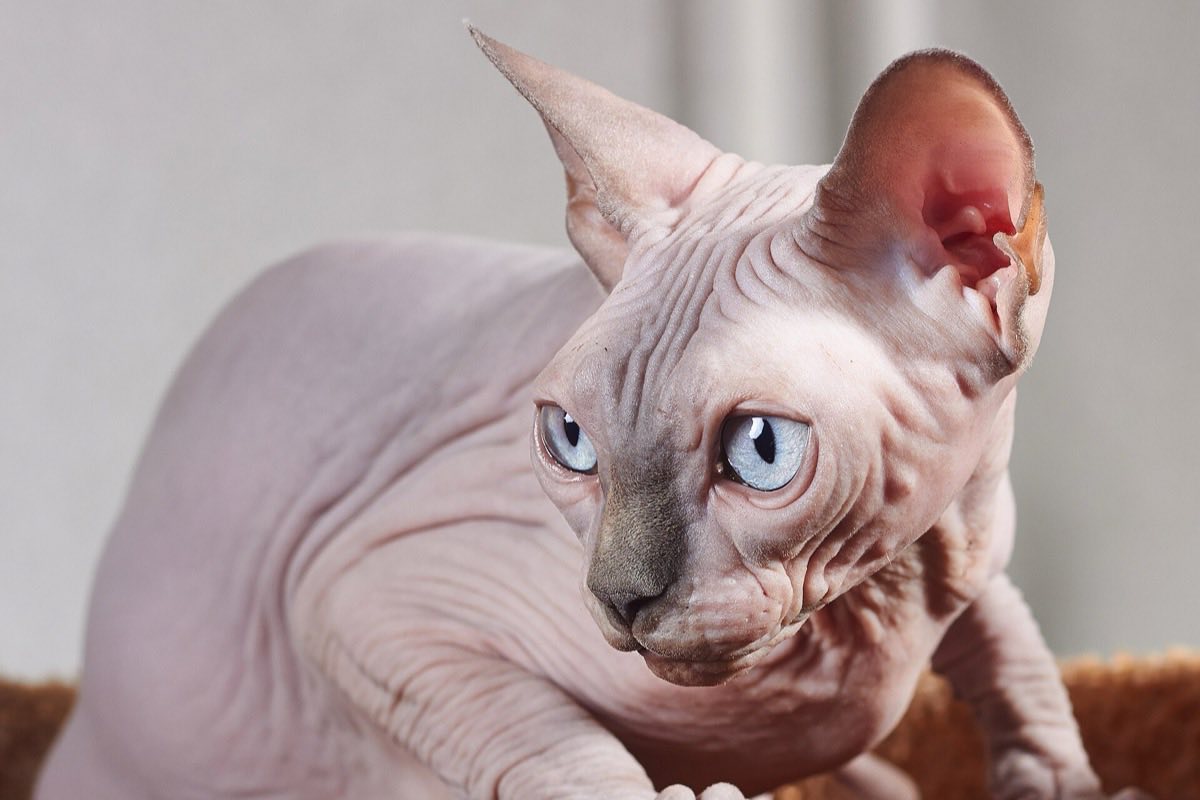
The Sphynx is a medium-sized, muscular cat with a broad chest, a rounded, slightly pot-bellied abdomen and long, slender legs. The head is a modified wedge with prominent cheekbones, a strong chin, very large ears and big, lemon-shaped eyes. Wrinkles are prized on the head, shoulders and between the ears.
Most Sphynx cats are not completely bald. Many have a fine down that feels like warm suede or a peach, and some have short hair on the nose, ears, tail tip or feet. Whiskers and eyebrows may be short, sparse or absent. Coat colors and patterns, from black to calico to colorpoint, show up in the pigment of the skin.
Temperament
Sphynx cats are known for being extroverted, energetic, affectionate and highly social. Most love attention, enjoy meeting visitors, and will happily ride on shoulders, climb under the bedcovers and press against you for warmth. They are curious, playful and often clownish, and many stay kittenish well into adulthood.
This sociability means a Sphynx generally wants a lot of company. Many do best in homes where someone is around much of the day or where there is another sociable cat. They tend to get along well with other pets and with considerate children.
Care needs
Skin care. In a furred cat, the coat absorbs the natural oils produced by the skin. In a Sphynx, those oils build up on the skin, leaving greasy marks on furniture and potentially clogging pores. Most Sphynx cats need a bath roughly every week or two, though the right frequency depends on the individual. Use a gentle shampoo made for cats (ask your veterinarian which one), rinse thoroughly and dry completely so your cat doesn't get chilled. Don't over-bathe, which can dry and irritate the skin. Between baths, a soft cloth dampened with warm water helps.
Ears and nails. Without hair to keep debris out, Sphynx ears produce a lot of waxy buildup and usually need cleaning weekly with a vet-recommended ear cleaner. Wax and oil also collect in the nail folds, which can be gently cleaned when you trim the nails.
Warmth. Sphynx cats lose body heat quickly. Keep your home comfortably warm, offer heated or fleece-lined beds (choose low-temperature pet heating pads designed for cats), and consider a soft, well-fitting sweater in cold weather if your cat tolerates it.
Sun protection. Their skin can sunburn. Limit direct exposure through sunny windows and keep them indoors or in shaded enclosures. Don't use human sunscreen on cats; some ingredients are toxic if licked.
Diet. Sphynx cats burn a lot of energy keeping warm and often eat more than you'd expect for their size. Feed a complete, balanced diet and let your veterinarian help you track body condition. See our feeding guide.
Health considerations
- Hypertrophic cardiomyopathy (HCM). This is the most significant health concern in the breed. There is no single DNA test, so responsible breeders screen breeding cats regularly by echocardiogram with a veterinary cardiologist. Ask to see results for both parents, and talk to your veterinarian about whether screening is appropriate for your cat.
- Hereditary myopathy. An inherited muscle weakness (also seen in the Devon Rex), causing problems such as difficulty holding up the head and swallowing. A DNA test is available.
- Skin conditions. Yeast infections, acne-like breakouts and other skin problems are more common in the breed, often linked to oil buildup.
- Dental disease. Gum disease is common in Sphynx cats. Daily toothbrushing and regular dental checks help.
- Respiratory infections and cold stress, particularly in kittens.
Rapid or labored breathing, open-mouth breathing or sudden hind-leg weakness can be signs of heart disease and need emergency care. Our health guide covers other warning signs.
Who the Sphynx suits
A Sphynx suits people who want an exceptionally affectionate, interactive cat and who don't mind regular bathing, ear cleaning and keeping the house warm. It's a good match for homes where someone is around often, or where there's another sociable pet.
It's not the right cat for anyone looking for a low-maintenance or hypoallergenic pet, or for someone who isn't prepared for heart screening and the cost of a breed with known health concerns.