Russian Blue at a glance
- Origin
- Northern Russia (traditionally the Arkhangelsk region); developed in Britain
- Size
- Medium; fine-boned and graceful
- Typical weight
- About 7–12 lb
- Coat
- Short, dense, plush double coat with silver tipping
- Colors
- Solid blue in most registries
- Life expectancy
- Commonly 15 years or more
- Grooming needs
- Low
- Activity level
- Moderate
On this page
Origin and history
By tradition, the Russian Blue comes from the Arkhangelsk (Archangel) region on the White Sea coast of northern Russia, and sailors are said to have carried blue cats from there to Britain in the nineteenth century. Whether every part of that story is true is hard to say, but blue shorthaired cats from Russia were shown in England in the 1870s, sometimes under the name "Archangel Cat."
The breed was refined in Britain and Scandinavia during the twentieth century. Like many breeds, it suffered during the Second World War and was rebuilt with help from other blue cats, including British Blues and Siamese, before breeders worked to restore the original type. Russian Blues were imported to the United States in the early twentieth century and became established there after the war.
Appearance
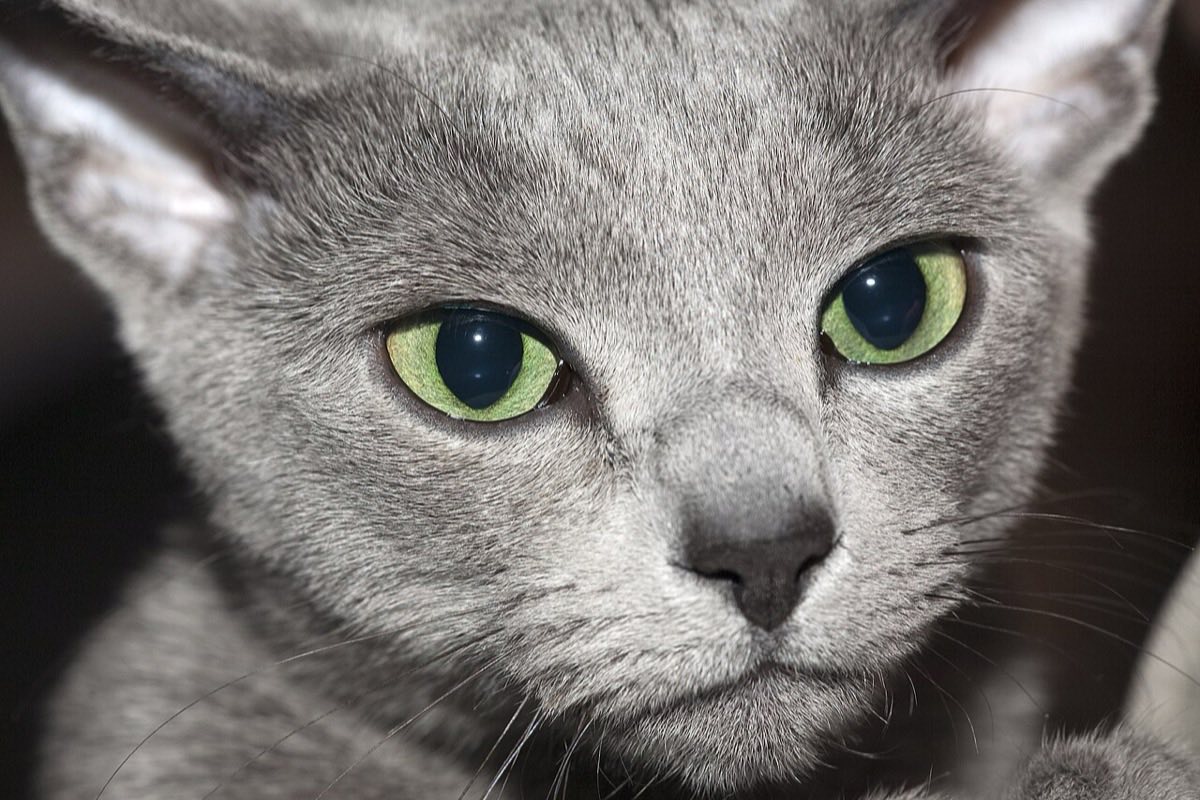
The Russian Blue is a medium-sized, fine-boned, graceful cat with long legs, small rounded paws and a long, tapering tail. The head is a smooth, modified wedge with a flat top, large ears set wide and upright, and a characteristic upturned mouth that gives many Russian Blues a gentle "smile."
The eyes are a striking vivid green. Kittens are born with blue eyes that usually change to yellow and then gradually to green as they mature.
The coat is the breed's crowning feature: short, very dense and soft, with a double layer that stands out from the body like plush. Each blue-gray hair is tipped with silver, giving the coat a shimmering, almost luminous look. Most registries accept only blue. A longhaired version is recognized by some associations as a separate breed, the Nebelung.
Temperament
Russian Blues are usually gentle, quiet, intelligent and loyal. Many are reserved or shy with strangers and may disappear when visitors arrive, but with their own people they are affectionate, playful and often quite attached to one or two favorites. They tend to have soft voices and use them sparingly.
Many Russian Blues are creatures of habit. They like routine, regular meal times and a calm household, and they can be unsettled by sudden changes, frequent visitors or chaotic environments. That makes them good companions for quieter homes and for people who appreciate a cat that observes before it engages. They usually enjoy interactive play and puzzle toys, and some learn to fetch. As always, individual cats vary, and early socialization makes a big difference.
Care needs
Grooming. The dense coat sheds relatively little and needs only a weekly brush with a soft brush or comb. A rubber grooming mitt works well for loose undercoat during seasonal shedding.
Routine and calm. Help a Russian Blue settle by keeping a predictable routine and giving it quiet places to retreat, such as covered beds, high shelves or a spare room when guests visit. Our guide to bringing a new cat home explains how to set up a safe room for shy cats.
Play and weight. Russian Blues are known for enjoying their food. Measure meals, use food puzzles and keep up daily play to prevent weight gain. See our feeding guide.
Litter box hygiene. Many Russian Blues are particular about cleanliness. Scoop at least daily, and see our litter box guide for setup advice.
Health considerations
Russian Blues are generally regarded as a healthy, long-lived breed, with no major breed-specific inherited disease as well known as those in some other breeds. Points to watch include:
- Obesity, which raises the risk of diabetes and arthritis. Keep your cat lean with measured meals and regular play.
- Urinary tract problems, including bladder stones, which can affect any cat but are worth watching for in a cat prone to weight gain.
- General age-related conditions such as kidney disease, hyperthyroidism and dental disease, which are common in older cats of all breeds.
Ask breeders about the health history of the parents and lines. Regular checkups, and twice-yearly visits once your cat is a senior, help catch problems early. See our guides to health and vet care and senior cats.
Who the Russian Blue suits
A Russian Blue is a great match for calm households, singles, couples and older adults who want a gentle, quiet, affectionate cat and can offer a stable routine. It can suit apartments and people who work regular hours, especially if there's a compatible feline companion.
It may be less happy in very busy, noisy homes with a constant stream of visitors, or with families whose children want a cat that will always join in the fun. Give a Russian Blue time and patience, and you'll usually be rewarded with a devoted companion.