Persian at a glance
- Origin
- Persia (Iran) and the surrounding region; developed largely in Britain
- Size
- Medium; stocky and short-legged
- Typical weight
- About 7–12 lb
- Coat
- Very long, thick and fine, with a dense undercoat
- Colors
- A very wide range, including solids, bicolors, tabbies and pointed (Himalayan) cats
- Life expectancy
- Commonly 12–15 years
- Grooming needs
- High
- Activity level
- Low
On this page
Origin and history
Long-haired cats are thought to have reached Europe from Persia (modern-day Iran) and neighboring regions by the seventeenth century, carried by travelers and traders. For a long time, longhaired cats of various types were lumped together, but by the late nineteenth century British breeders had begun developing a distinct, round-headed, heavily coated cat, and the Persian was among the breeds shown at the first organized cat shows in England. Queen Victoria is often said to have kept blue Persians, which did no harm to their popularity.
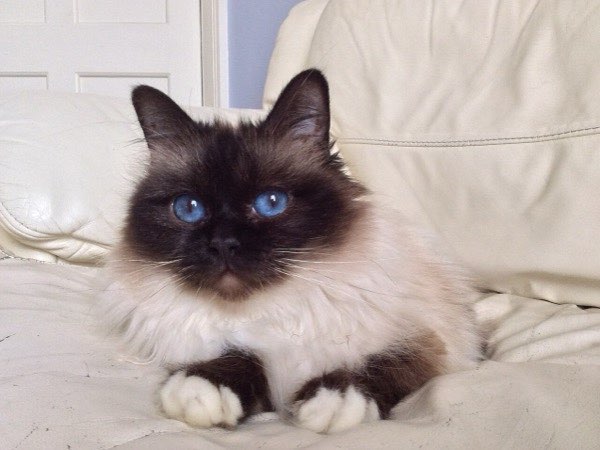
In the twentieth century, particularly in the United States, breeders increasingly selected for a shorter nose and flatter face. Today there is a spectrum, from very flat-faced "peke-face" or "extreme" show types to more moderate "doll face" or traditional Persians with a visible nose. Related breeds include the Himalayan (a Persian with Siamese-style points, treated as a Persian color division by some registries) and the Exotic Shorthair, essentially a Persian with a short, plush coat.
Appearance
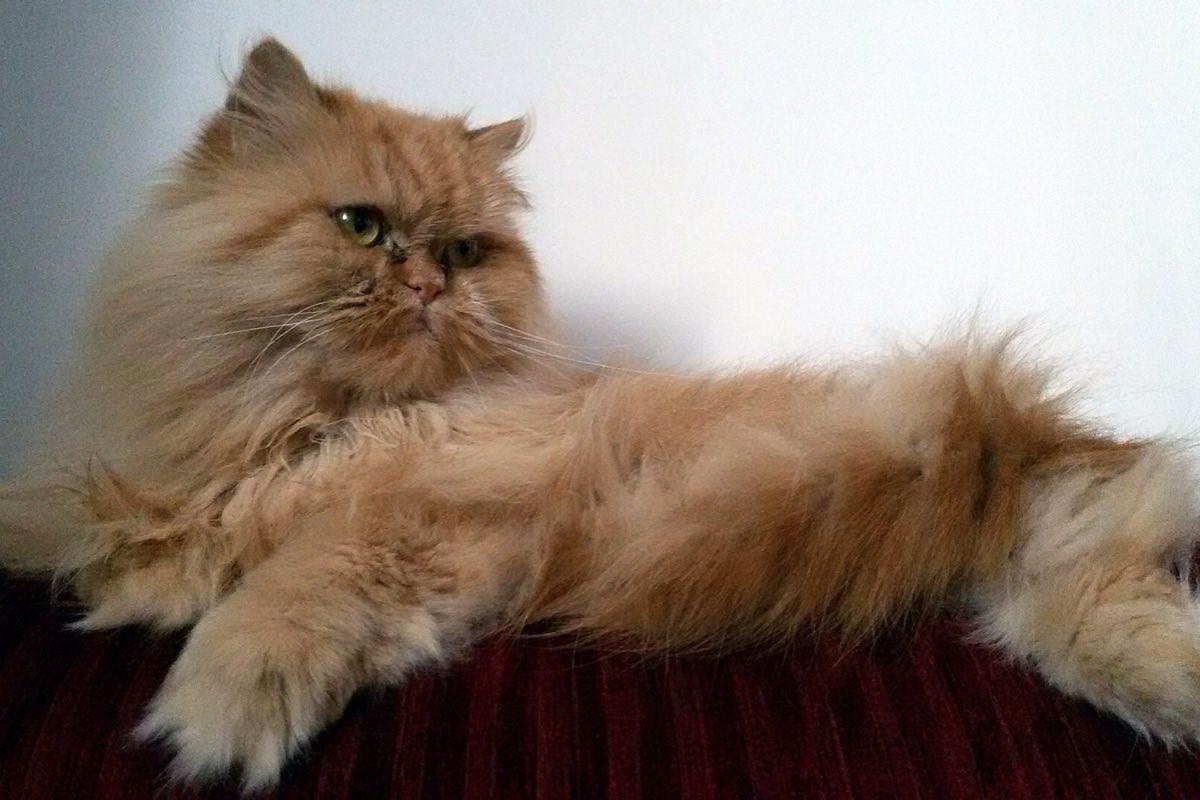
The Persian is a cobby, compact cat with a broad chest, short thick legs, a round head, small rounded ears and large round eyes. The coat is the defining feature: long, fine and dense, with a thick undercoat and an impressive ruff around the neck. Eye color depends on coat color and includes copper, blue, green and odd-eyed combinations.
The degree of flatness in the face varies a lot between lines. When you visit a breeder or meet a cat, look at the nostrils as well as the face. Open nostrils that you can see air moving through are better for the cat than narrow, slit-like ones.
Temperament
Persians are typically quiet, gentle and placid cats. Most prefer a calm, predictable household, a comfortable spot to lounge and a person whose lap is available on a regular schedule. They tend to be less acrobatic than many breeds and are more likely to observe from a sofa than to scale the bookcases.
That doesn't mean they're uninterested. Most Persians enjoy gentle play with wand toys and like being near their people, and many have soft, musical voices that they use sparingly. Loud, chaotic homes can stress them, so they often do best with older, calmer children who understand how to handle a cat respectfully. As with any breed, individual personalities vary.
Care needs
Daily grooming is not optional. A Persian's coat mats quickly, and mats are painful: they pull on the skin, trap moisture and can hide skin infections. Plan on combing to the skin every day with a wide-toothed metal comb, then a finer comb, paying special attention to the armpits, belly, behind the ears and the britches. Many owners also book regular professional grooming, and some choose a shorter "lion cut" or "comb cut" for comfort. If your cat already has tight mats, don't try to cut them out with scissors, as it's very easy to cut the skin; ask a groomer or your veterinary clinic. Our grooming guide has more detail.
Hygiene. Long fur around the rear end can trap feces. A "sanitary trim" by a groomer and a quick daily check keep things clean. Some Persians do better with a large, low-sided litter box and an unscented, low-dust litter that doesn't cling to their coat.
Eye and face care. Many Persians have tear overflow that stains the fur and can irritate the skin in the folds near the nose. Gently wipe the area once or twice a day with a soft cloth dampened with warm water, and keep the facial folds clean and dry. Ask your veterinarian before using any cleaning product near the eyes.
Keeping cool. Flat-faced cats are less able to cool themselves by panting and can overheat. Keep them indoors in hot weather, in a cool room, with plenty of fresh water.
Health considerations
The Persian's appearance comes with a number of well-recognized health issues, and it's important to go in with open eyes:
- Brachycephalic (flat-faced) problems. A shortened skull can mean narrowed nostrils, noisy or labored breathing, heat intolerance, crowded or misaligned teeth and difficulty picking up food. More extreme faces are associated with more severe problems. In some cats, surgery to widen the nostrils helps.
- Eye problems. Prominent eyes and facial folds contribute to tear overflow, eyelids that roll inward (entropion), corneal ulcers and a painful condition called corneal sequestrum. Squinting, cloudiness or a painful-looking eye needs a vet visit the same day.
- Polycystic kidney disease (PKD). An inherited condition in which cysts form in the kidneys and can lead to kidney failure, usually in middle age. A reliable DNA test exists, and reputable breeders test their breeding cats and should show you the results.
- Skin and coat. Persians are considered more prone to ringworm (a fungal skin infection that can spread to people) and to skin problems under matted fur.
- Heart disease. Hypertrophic cardiomyopathy (HCM) occurs in Persians, as in many breeds.
- Birthing difficulties are more common in flat-faced breeds, one of many reasons to spay your cat unless you are an experienced, ethical breeder.
Choose a breeder who tests for PKD, who breeds for more moderate faces and open nostrils, and who is honest about health. Ask your veterinarian about kidney screening as your cat ages, and see our health guide for signs that need urgent attention. Breathing with an open mouth, or breathing that is noisy and labored at rest, is an emergency.
Who the Persian suits
A Persian suits a calm household and an owner who genuinely enjoys grooming and is prepared for its cost in time or money. It's a good fit for people who want a gentle, affectionate, mostly sedentary companion and who can provide a cool, quiet home.
It is not a good choice for anyone who wants a low-maintenance cat, who can't commit to daily coat and face care, or who lives somewhere hot without reliable air conditioning. If you love the look, consider a doll-face Persian with a less extreme face, or an adult Persian from a breed rescue.